

Novelist and Reviewer: Author: The Other Book, The Liberators. The Darkening Path Trilogy: The Broken King, vol. 1; The King's Shadow, vol. 2, and The King's Revenge, vol. 3. The Double Axe, a retelling of the Minotaur story, and The Arrow of Apollo. How To Teach Classics to Your Dog published October 2020. Wildlord, publishing October 2021.
Monday, 10 September 2018
The Lost Magician by Piers Torday: review

Wednesday, 22 August 2018
On Reading Habits
The author, Will Self, has come under fire for admitting to reading up to 50 books at a time - electronically, dipping in and out.
 The reaction was predictable. He must be lying. "I stop reading Dickens cos it's so boring, therefore everyone else must!" is the cry. It made me wonder: how can anyone know what anybody else's reading habits are like? At university, I was always reading several books a week: the primary texts we were studying; a smattering of secondary texts; and then a novel or two on the side which had nothing to do with my courses.
These days, I'm usually reading about ten books or so at a time, at various stages. I read, re-read; sometimes I'm looking at a book for the third, fourth or even fifth time. As a book reviewer, I always have the tome I'm currently working on - at the moment, it's three: a work of fantasy for the TLS; a children's book for the Guardian in the pipeline; and a novel for The Spectator.
Some I've only just begun, some I'm a long way through. I'm reading G K Chesteron's The Napoleon of Notting Hill, which I dip into when I can for some prescient light relief. Since I'm giving a lecture soon on Paradise Lost, I'm studying a book about the poem by Loewenstein, as well as the poem itself and the introduction to it in the Penguin edition. I've been reading - or perhaps that is the wrong word; absorbing might be better - The Shorter Pepys for about ten or more years now - a month at a time, savouring his love of pies and his trips down the river and his delight in acquiring new clothes.
Frances Wilson's Guilty Thing is a fabulously well written biography of Thomas de Quincey; I'm drinking it down it alongside Confessions of An Opium Eater, which I'm re-reading. I've been perusing a book by Norman Davies called Vanished Kingdoms, about the kingdoms, large and small, which once dotted Europe; in almost total contrast to this serious work, I'm half way through the second volume of Simon Raven's amusing and louche Alms to Oblivion Series, which I read a few pages of before sleep, as a kind of tonic.
I've been completing my awareness of Henry Green for some time, being half way through the final novel of his that I haven't yet read, Concluding; alongside this I'm dipping into his contemporary, Evelyn Waugh, simply because my old copy of Brideshead Revisited turned up, and I couldn't help but immerse myself in it again. (Funny to think that everyone thought Green would be read long after Waugh.) A biography by Hannah Pakula of Queen Victoria's daughter, Princess Victoria, who married the future Emperor of Germany, has been keeping me company in the small hours. Yesterday, I re-read Hamlet, because I'm teaching it next term; today, I'm looking again at Webster's The Duchess of Malfi, each time finding new resonances and mirror images.
Is this bragging? Or is it just part of the way that I read? Reading, to me, is so much a part of life, that I would not be able to live without it; and that, of course, feeds in to writing. Why roll your eyes when someone says they're reading something "difficult"? Why not, instead, try it yourself? You never know - you might find something worthwhile. There's many books on the shelves, and one of them, somewhere, will set your soul on fire in a way that Dan Brown never can.
 The reaction was predictable. He must be lying. "I stop reading Dickens cos it's so boring, therefore everyone else must!" is the cry. It made me wonder: how can anyone know what anybody else's reading habits are like? At university, I was always reading several books a week: the primary texts we were studying; a smattering of secondary texts; and then a novel or two on the side which had nothing to do with my courses.
 These days, I'm usually reading about ten books or so at a time, at various stages. I read, re-read; sometimes I'm looking at a book for the third, fourth or even fifth time. As a book reviewer, I always have the tome I'm currently working on - at the moment, it's three: a work of fantasy for the TLS; a children's book for the Guardian in the pipeline; and a novel for The Spectator.
Some I've only just begun, some I'm a long way through. I'm reading G K Chesteron's The Napoleon of Notting Hill, which I dip into when I can for some prescient light relief. Since I'm giving a lecture soon on Paradise Lost, I'm studying a book about the poem by Loewenstein, as well as the poem itself and the introduction to it in the Penguin edition. I've been reading - or perhaps that is the wrong word; absorbing might be better - The Shorter Pepys for about ten or more years now - a month at a time, savouring his love of pies and his trips down the river and his delight in acquiring new clothes.
Frances Wilson's Guilty Thing is a fabulously well written biography of Thomas de Quincey; I'm drinking it down it alongside Confessions of An Opium Eater, which I'm re-reading. I've been perusing a book by Norman Davies called Vanished Kingdoms, about the kingdoms, large and small, which once dotted Europe; in almost total contrast to this serious work, I'm half way through the second volume of Simon Raven's amusing and louche Alms to Oblivion Series, which I read a few pages of before sleep, as a kind of tonic.
I've been completing my awareness of Henry Green for some time, being half way through the final novel of his that I haven't yet read, Concluding; alongside this I'm dipping into his contemporary, Evelyn Waugh, simply because my old copy of Brideshead Revisited turned up, and I couldn't help but immerse myself in it again. (Funny to think that everyone thought Green would be read long after Waugh.) A biography by Hannah Pakula of Queen Victoria's daughter, Princess Victoria, who married the future Emperor of Germany, has been keeping me company in the small hours. Yesterday, I re-read Hamlet, because I'm teaching it next term; today, I'm looking again at Webster's The Duchess of Malfi, each time finding new resonances and mirror images.
Is this bragging? Or is it just part of the way that I read? Reading, to me, is so much a part of life, that I would not be able to live without it; and that, of course, feeds in to writing. Why roll your eyes when someone says they're reading something "difficult"? Why not, instead, try it yourself? You never know - you might find something worthwhile. There's many books on the shelves, and one of them, somewhere, will set your soul on fire in a way that Dan Brown never can.
Saturday, 11 August 2018
Perfidious Albion by Sam Byers: review in the Financial Times

Thursday, 9 August 2018
The Arrow of Apollo hits 80 %
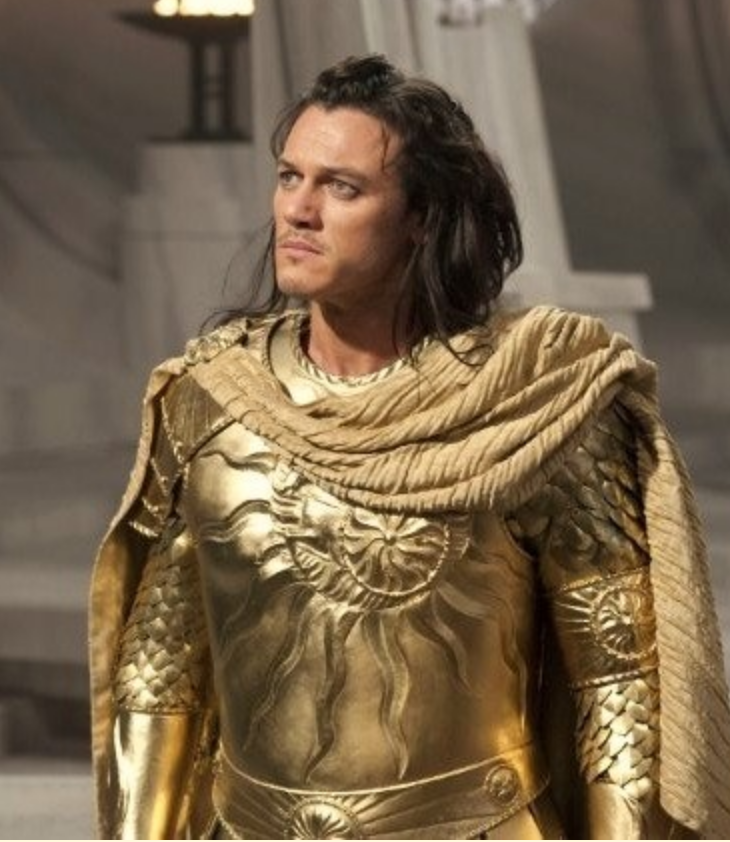 |
| Apollo. Or is it Luke Evans? |
Wednesday, 1 August 2018
Give a Book: Book of the Month

Monday, 30 July 2018
Summer Reading 2018

A friend in academia recommended this to me, as it documents the travails of a visiting lecturer as he navigates the perils of university life. Now back in print, having been first published in 2006, it's an amusing and punchy comedy, in which every character is nastier than the last, and with some well-aimed swipes at obscurity and pretension.

A long, careful re-read of this magnificent poem, savouring every line and allowing myself to become lost in the grandeur and beauty of the language, without critical thinking. The scale of the poem is awe-inspiring: from the depths of Chaos through Hell, across space itself, where many planets hang, ready to bring forth life; the sun itself, and the whole world, hanging on its golden chain; the crystalline walls of Heaven. I will be happily making my way through this once more over the next month or so, with a more analytical viewpoint, but for the moment, I was content simply to stand in amazement.
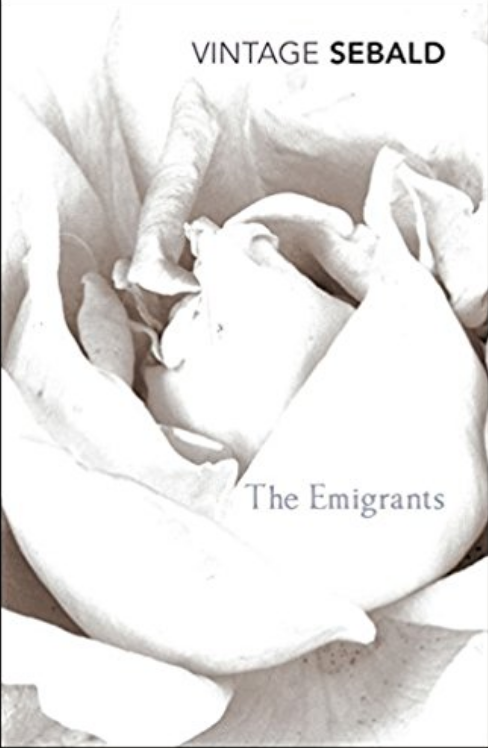
I am relatively new to Sebald, and I can't understand how I could have lived without him. The craft of his sentences is simply extraordinary: so effortless and seemingly insouciant, but so carefully and deeply considered. Here he looks at several lives of Jewish people displaced by war. Some, such as Cosmo Solomon, the gambler with the lucky streak and devoted manservant, are astonishing; yet even the more "ordinary" ones have a lambency to them that burns far long after the book has been finished. Images recur, deftly, such as butterfly hunters and French horns, perhaps suggesting patterns in chaos, or perhaps suggesting that whilst we look for patterns in chaos, the reality is that there are none.

Having very much enjoyed the first volume of the Alms to Oblivion Sequence, I was warned off the second; but I persevered. The Judas Boy continues the saga of Fielding Gray, Raven's deformed anti-hero, who is sent to Greece on a mysterious mission, but is deflected by a beautiful boy who resembles the one he betrayed at school. The plot is thin, and the whole has a feel of having been dashed off in between lunch and supper; but it was still an enjoyable-ish way to spend an afternoon, partly because of Raven's gift for skewing personalities with a line or two, and partly because one can recognise the types he was writing about as being true to life. Raven is like Anthony Powell's slightly seedy, alcoholic younger brother.
5. Vacant Possession by Hilary Mantel
Continuing my long-standing delve into Mantel's backlist, this is her second novel, a sequel of sorts to Every Day is Mother's Day, in which the demented Muriel Axon and her seance-giving mother cause trouble in the suburbs. This is an extraordinary novel, completely uninterested in pandering to the tastes of a reader, with Mantel's sentences stretching out like the tendrils of the ghosts she writes about, ready to snatch and tear. Muriel returns to wreak what she considers revenge on the people who have wronged her. It's gruesome and wicked, full of darkness and terror. The title, coincidentally, is found in Paradise Lost, where Michael is being told to go to Eden to bear his message of exile to Adam and Eve:
 MICHAEL, this my behest have thou in charge,
 Take to thee from among the Cherubim
Thy choice of flaming Warriours, least the Fiend
Or in behalf of Man, or to invade
Vacant possession som new trouble raise:
Hast thee, and from the Paradise of God
Without remorse drive out the sinful Pair,
From hallowd ground th' unholie, and denounce
To them and to thir Progenie from thence
Perpetual banishment.
Monday, 23 July 2018
An interview with Tamsin Rosewell of Kenilworth Books about THE ARROW OF APOLLO

Subscribe to:
Posts (Atom)