Showing posts with label philip womack. Show all posts

Tuesday, 29 July 2025

Ferdinand Mount, and a short story for subscribers

 I reviewed Ferdinand Mount's latest novel, The Pentecost Papers, for the TLS.  Many years ago, I interviewed him for the Telegraphand some time before that, I reviewed his novel, The Condor's Head.

 And over on Substack, I've released the first part of a short story for subscribers.  "Tor" is about a young boy who is left behind in a tower by himself during a long war. 

Part Two: read it here. 


Thursday, 4 May 2023

Wednesday, 29 March 2023

Interview with Suzi Feay's Book Bag


I had the great pleasure of being interviewed by Suzi Feay for her new series, Suzi's Book Bag. You can listen to / watch the interview here.

Sunday, 13 March 2022

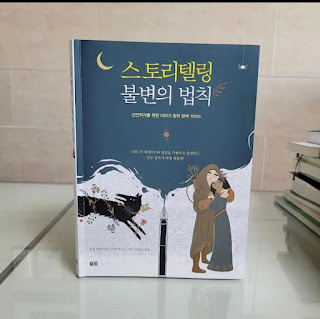
WRITE YOUR OWN MYTHS hits Korea.

 I love seeing foreign editions - and the Korean edition of WRITE YOUR OWN MYTHS has appeared. Looks lovely. Published by Booksetong Co.


Monday, 31 January 2022

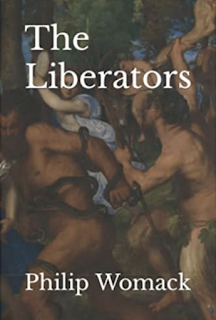
The Liberators: First Paragraph


Blackwood darted through the crowds like lightning, his feet pounding on the pavement, splashing in puddles. The chill of December seared through his bones. Around him the press of people on their Friday shopping trips surged and flowed; a flock of pigeons scattered, startled. Blackwood pushed past an old lady, overturning her trolley. He saw a railing ahead of him, checked behind, and leaped over it in one bound, landing lightly on the other side. It was raining, and he was panting, and he could feel the taste of blood in his mouth, and drops of tangy sweat rolled down his cheeks. The stab wound in his shoulder throbbed. He had been running for half an hour, and he had lost all communication with Hunter, and one of the Liberators was just behind him. 

From The Liberators by Philip Womack: get it here.

Saturday, 22 January 2022

The Liberators back in print


I decided to try out Print on Demand, as I like the idea of keeping back list titles alive. The Liberators was my second novel, and it came out 12 years ago. It was about a young boy, Ivo, who comes to London and finds some distinctly strange things going on. It's dark and weird and won some fans (including a girl who told me at the Young Adult Literature Convention that it was her favourite book.) 

It also deals with some of the same themes as my in print books, particularly Wildlord, which sees an older boy going off to Suffolk and encountering a mage-like figure. So I thought I'd bring it back. I hope it may find new readers.

You can buy it on Amazon here.

Tuesday, 28 December 2021

The Craig Cup


The novelist and critic Amanda Craig has awarded Wildlord the Craig Cup for Most Underrated Children's Book. Her review is here on Writers Review.

Wednesday, 1 September 2021

Interview with Paperbound: Out now


The special spooky issue of Paperbound is out now, and a interview with me about WILDLORD is in it. You can read it here.

Wednesday, 21 July 2021

Wildlord: proofs are here.

 I'm absolutely thrilled to see a proof of Wildlord, which will be published in October 2021 by Little Island. 

Here's a lovely quote: "Ancient sorcery and wild magic clash in this thrilling tale which explores love, loss, and the power of friendship" - Katherine Langrish, Author of From Spare Oom to War Drobe.

Thursday, 25 February 2021

News: Teen fantasy novel, WILDLORD, to be published October 2021

 I'm absolutely thrilled to announce that my teen novel, WILDLORD, will be published by Little Island in October 2021. Here's the announcement in Bookbrunch.


Thursday, 19 November 2020

Write Your Own Myths

 I'm absolutely thrilled with this beautiful cover by Anette Pirso, who has also illustrated WRITE YOUR OWN MYTHS throughout, making the book a rich and beautiful experience. It's a non-fiction title for 12+ - a guide to creating your own myths with creative writing prompts.

Thursday, 1 October 2020

Launch of How to Teach Classics to Your Dog, and a review of Peter Stothard


 Today is the day we are launching HOW TO TEACH CLASSICS TO YOUR DOG, my quirky introduction

to the Greeks and the Romans. I very much hope that you enjoy it, and also, if you do, would be very grateful for any reviews. You can order a copy here, from Waterstones, or pop into your local independent bookshop.

I've reviewed Peter Stothard's new book, with a suitably classical theme, The Last Assassin, for The Spectator. Read it here.

Thursday, 6 August 2020

Philip Reeve reviews The Arrow of Apollo

 Philip Reeve has been one of my absolute favourite children's authors, since I first encountered his fantastic Mortal Engines series, in which a devastated Earth is traversed by moving cities. So I am really thrilled that he's reviewed The Arrow of Apollo on his blog, which you can read here.


Monday, 20 July 2020

The Tower by Philip Womack

I'll be posting sections from my YA short story, 'The Tower', on Ko-fi, over the next few days. It's a fantasy piece about isolation. You can read it here.

Monday, 12 February 2018

The Fall of Troy: Part 5

Paris and Helen escaping the Court of Menelaus (Kauffmann)
THE FALL OF TROY
by Philip Womack

PART 5: THE SUITORS OF HELEN

Part 5: The Trojan War

Menelaus woke from the feasting of the night before with a dry throat and a creeping sense of unease. He rolled over, reaching for the pitcher that lay by his bed. Once he had quenched his thirst, he sat up, scratched his belly, and listened. 

There was shouting in the corridors. Something had gone wrong. His first thought was that those Trojans had attacked his men in the night. He groped for a sword.

Somewhat blearily, he made his way along the corridors to the women’s quarters, maids and serving boys ducking out of his way as he went. None would give him a straight answer.

In Helen’s room he found some of her women; one or two were holding their hands up in despair; some were tearing at their hair; others were fruitlessly combing through chests and looking behind couches. Helen's combs were there; her fine dresses were there; the bronze bowl in which she kept her scented water was there, newly filled for her morning refreshment.
But of Helen herself there was no sign.

The rooms that the Trojans had been using were now empty. They had left nothing behind them, except a couple of maids with swelling bellies.

Menelaus snapped a spear in half, and flung the sharp part into the ground, where it stuck.

Another of the threads in this great and complex tale was woven before Helen got married to Menelaus. All the kings and princes of Greece had wanted her hand. Her father, Tyndareus, was presented with a rather tricky problem. How could he stop those who didn’t win her from tearing off each other’s heads? Ajax the Greater, in particular, was not somebody whom you would want to come up against if he bore a grudge against you. The way that he cracked open his nuts was particularly menacing.


It was Odysseus, of course, who came up with a solution. Helen would choose her husband: and all the other suitors would swear an oath. They would protect the winner from all harm.

Into the fog of Menelaus’s mind came the memory of Odysseus, dark haired, with his pointed chin and his clever eyes. Menelaus had never  liked him, but he had to admit that he was sharp. The oath had been a good idea.  And now that the worst had happened, it was time to call in the favour. Helen, his wife, had been stolen away by a miminy-piminy Trojan, a prancing, preening ex-shepherd: he could not stand for it. The heroes would have to come to his aid. And he would mount an expedition to retrieve her. He ordered the smiths to get to work.

The best horses were chosen, and messengers galloped out across all Greece. Menelaus and the rest of his court began to make their way to the palace of his brother, Agamemnon, the High King of all the Greeks.

They found Agamemnon playing dice with a smooth young chap called Aegisthus, whilst his wife, Clytemnestra, sat by the side, pouring them cool drinks. A little girl called Iphigenia clung to her mother’s skirts, watching the warriors with their flashing armour stamp into the courtyard. They paused in their drinks, and looked up, and gathered by the look on Menelaus's face that he was not here to pay a social call.
The links in the chain were forged. Agamemnon set up camp at the Port of Aulis, and went out hunting with his men, and found many fine deer, including a beautiful hind which they chased all day and caught as the sun set. Menelaus was surprised to find that those suitors who had sworn the oath were not all that keen to fulfill it. Odysseus himself pretended to be mad, until they placed his baby son in front of a plough he was pulling.  Achilles was hidden on an island filled with girls; they found him when they threw a ball at him, and he caught it by bringing his knees together. The others came, reluctantly or not, leaving their farmlands and their own wives and children, all at the behest of their High King, and an oath they'd sworn years before.

Eventually they all gathered, at the port of Aulis. There were other reasons why they wanted to attack Troy: she was rich, and had many acres of fertile plains; she had access to trades and to cattle, and there were many townspeople who could be enslaved, and whose gold could enrich the halls of the Greeks. Ajax the Greater was tickled by the idea of adding to his flocks, and went about boasting about the time he'd bested someone who'd fought someone who'd once had a drink with Hercules.

By the time the last king arrived, and they were encamped with their armies around the ships at Aulis, the men as well as the chiefs were beginning to think that this was actually a noble war, with a noble aim. 

They were all ready. The ships were drawn up, their black hulls bare on the sand. The provisions were being loaded. The men were being told tales of honour and glory, of the heroic generations before them, and the deeds that they would achieve when they got to Troy. The blare of the trumpet filled the skies. 

 There was only one problem. There was no wind. And so the great fleet of the Greeks sat in the still harbour at Aulis, and the men grew bored and began fighting among themselves, and the kings and chiefs began to think of their halls and their hunts. 

Menelaus came to Agamemnon. "What can we do? We can't march over land." 

Agamemnon was more decisive than his brother, though he was not always right. He called his chief seers together, and ordered them to inquire into the causes of the calm. If only, Agamemnon thought privately, to stop the men's petty fights, which were beginning to become troublesome. 

Soon enough, after much peering into entrails, the chief of the seers, Calchas, came to Agamemnon. "My king..."

"Get on with it," said Agamemnon.

"You killed a hind." 

"I have killed many."

"This hind, my king, was sacred to the goddess Artemis."

Agamemnon sat up straighter. He could feel a pressure on his temples.

"For the fleet to sail to Troy, you will need to propitiate her. And Artemis is not a kindly goddess. In place of the deer, she demands..." The old priest's voice faltered. "Your daughter. Iphigenia."

The wine from Agamemnon's goblet spilled over his robe, and nobody could ever get out the stain.

NEXT WEEK: Iphigenia at Aulis. 

Monday, 8 January 2018

The Other Book: A Ten Year Anniversary

Ten years ago yesterday, on the 7th January 2008, my first children’s novel was published by Bloomsbury. It was called The Other Book - a dark, strange tale of a magical tome and the bloodline of Merlin and his sorceress bride Vivien, set in a Sussex preparatory school - and it duly appeared on the shelves (and, largely, stayed there). Also first published in 2008 was a certain other children’s author, to whom I will return later.

I had been counting down the days, quite literally, marking them in my diary with fervent exclamations. On that day, I thought, my life would change; on that day I would become what so many wish, for reasons usually unclear, to become: a published author. I’m not entirely sure what I did expect - a bottle of champagne from my editor, perhaps; or a card, or even an email. But the day went on as days usually do, and no email, card, or champagne appeared. It was the first moment of reality. Your book enters the world, and, for the most part, the world shrugs and turns back to looking at cat videos.

In the ten years since, the things that have changed are, mostly, to do with the inescapable rhythms of life, and of earning a living. The things that I, and many other writers do, are manifold, necessary, often dull, and, crucially, take you away from the actual act of writing (itself, I am aware, a very privileged thing.) I wish, however, that I had known then, when my first book burst, in its gorgeous gold and red livery, into the world, what I know now (but then again, who doesn’t.) Would things have been different? Sometimes I like to think so; other times, I am not so sure. One thing, though, will never alter: at a dinner party, if asked that terrible question - “What do you do?” - if you reply that you are a writer, the first question will always be, “Have you written anything I’d have heard of?” My answer used to be self-deprecating; now it veers towards the sardonic.

When The Other Book crept into view, I had no notion of the children’s book world: I was not on Twitter (embryonic, then); not in any children’s book groups or associations; I did not know any other children’s authors; I had not spent years building up a profile or engaging with other people in the industry. I did not know what it meant to publish a children’s book, or to be a children’s book author.

I had no idea of the “market”, or of the things that people do to sell books. I was, in other words, entirely unprepared. Looking back at my journal recently I was amazed to see that in 2008 I only gave a couple of talks - one to a library, where I sold no books; and one to a school who had booked me to talk to a group of three year olds. My book was, very firmly, for the 11+ bracket. Nothing I have done since has been more terrifying.

When I see debut authors appearing now, they often seem, to me at least, to have been trained, or to have had access to a kind of toolkit: they spring up, fully formed, giving talks, tweeting, blogging, and all the rest, with beautiful book following beautiful book annually. Even now I have no idea how these things work: what to say on Twitter, what to write about on this much-neglected blog. The only thing I ever wanted to do was write books - jagged, mysterious children’s books -  and to hope that those books found readers.

The publishing world moves to invisible currents. Since that first novel was published - to the kind of review that said “promising”, or “shows potential” - I have published five more, with three publishers. Each novel was a labour of love and hope, sweat and anxiety; each one bore on its shoulders the same weight and dreams; and each one did find some readers who loved it. None, however, has yet crossed the barrier into the general consciousness.

I have always received good reviews - one hopes that one grows better as a writer, after all. When I look at the first pages of The Other Book now, I wince: there are so many things wrong with it (I even sometimes use it as an example of how not to start a children’s book with my students.)

With The Liberators, in 2010, I touched some kind of nerve: the book was set after the financial crash, and saw a young boy battling a cult who wanted to bring chaos to the world. Readers enjoyed it; it was reprinted; for a few moments it seemed like it might have broken out into general view. I remember a friend joyfully texting me a picture of a pile of copies he’d seen in a bookshop in Vienna.

Whilst many enjoyed it, there were those who thought that its hero was too privileged, and his world of boarding schools, artists, bankers, civil servants and London townhouses too remote from the general reader. I have never understood this complaint, because what is fiction for if not to open a window onto a different life?  What is interesting about this is that I never heard this point made by children, who simply read, and absorbed, and were thrilled.

After The Liberators, a hiatus ensued. One thing that is not generally known about the publishing world is that writers are quite dependent on the people who actually work at the house: if your contact moves, then it can leave you stuck. My editor left Bloomsbury; a new one came along; and I, having no contract, and being inexperienced in the ways of the book world, decided not to take what now appears absolutely sensible editorial advice on a manuscript, and instead tried to sell it elsewhere. The result was a lost MS: “Cave”, set in a co-ed boarding school on a hill which is besieged by ecological terrorists. My agent thought it was great; my lay readers thought it was the best thing I’d written: publishers however were not so sure, and though I was called in for meetings, it was usually to say: “we’d love you to do something, but this isn’t quite it”, and the book was rejected everywhere.

What does a writer do when faced with rejection? Start again, of course, with the glimmer of a new, better book in your mind. I returned to the things I loved as a child, and particularly to the depths and weirdnesses of Alan Garner and Ursula Le Guin. Perhaps overly enthralled by them, I began work on another MS, which was to become The Broken King, published 4 years after The Liberators. It underwent many revisions, many false starts: it was intended to be the first part of a trilogy called “The Darkening Path”. I had ambitious plans. It would be cosmic, reaching through time and space and touching on the mysteries of the universe. Readers loved trilogies, didn’t they?

When The Broken King was published, I had not realised quite how arduous it would be to write parts two and three in, effectively, about six months each (whilst also dealing with what amounts to a full time job, and a growing family); I am still not sure that the sequels were the best that they could have been. And whilst the trilogy did find enthusiastic readers - the early reviews from children were superlative, and there were of course those who noted the echoes of Alan Garner - it did not touch the hearts of enough people. On occasion I receive messages from children who are obsessed with The Broken King: but, to coin a phrase, fine messages butter no parsnips.

Again, one returns to things one loved as a child: so The Double Axe was born, from the myth of the Minotaur. What if, I thought, the Minotaur had been a convenient fiction for other, darker purposes?   How would this story work from the point of view of one of Minos’s other children?

Once more, there were ambitious plans: for an interlinked series of up to ten novels, each revisiting a particular myth. Several large publishers were interested in the concept; but there was no firm offer, and in the end, I settled for a one book deal with a small publisher. They wanted to get the book out before the final part of The Darkening Path,  so I had a rather absurd situation in which people were expecting the end of a series, and in fact were reading the beginning of another. (Even now, my Wikipedia entry records The Double Axe, erroneously, as part of The Darkening Path trilogy.)

The book - which I considered my best, the sharpest, the most stylish, the one that, at last perhaps, was really beginning to know what it was doing, the one that received the kindest reviews, from readers, reviewers, and other children’s authors - was published, was briefly lifted by some generous praise; and then drifted, lost on the bewildering currents of fashion.

So many factors influence a children’s book’s reception: do librarians like it? Does it fit into a curriculum? Can it get onto a table in Waterstones? And sometimes all those factors need to come together for a book to fly: and most of the time, they don’t.

I’m now onto my seventh full length work of fiction, which, for various complex reasons, and a combination of happy chance and dogged industry, I have decided to crowdfund with Unbound. The Arrow of Apollo is now, after two months, 40 per cent funded, and with it I hope to bring an enjoyment of myth and classics into schools, as well as providing an epic and exciting story. You can see more about it here.

I have learnt much over the past ten years. Festivals, talks, school visits, are the life-blood of the children’s author, although there have been as many humiliations as triumphs. At a windy, cold children’s festival in a tent full of hay bales, about to start a reading, I overheard a lady in the front row say to her daughter: “That man’s going to read us some nice Roald Dahl!” I hated to disabuse her. I’ve driven hundreds of miles to speak to 7 adults and a dog, and not had my travel expenses reimbursed. Nobody bought a book (not even the dog.) I was due to give a creative writing workshop in a library in East London: after waiting for ten minutes, the only other person in the room was  an old lady who wanted somewhere warm to sit where she could eat her peanuts.

Does all of this help to sell books? The jury, as they say, is still out.

I have learned that good reviews do not sell a children’s book. I have learned that publishers have many other books to deal with apart from your own, and many pressures on their time, and a budget that is often directed to something else, and that there is only a small window during which your book will be promoted (if it is even promoted at all). I have learned that disappointment is embedded into writing fiction: I have spoken to authors whom I consider wildly successful, who have won prizes and had film deals and have sold half a million copies or more: they shake their heads, purse their lips, and say their careers are hanging on a thread. What hope then for those of us hanging on by even more slender threads?

Of the other children’s authors who were first published in 2008, the one I referred to at the beginning of this article was a certain unknown called David Walliams, whose books now don’t just corner the market: they swamp it. Celebrities are everywhere in children’s book writing, and the message that sends worries me. Must writing now become part of your “brand”, like launching a scent or a line of underwear? Why bother continuing with the manuscript you’re plugging away with, when you know it won’t receive a tenth of the publicity or attention that some C list comedian or supermodel’s ghost-written debut will?

Well. The only thing that one can do - the only thing that I will do - is to keep writing: keep rethinking, revising, reworking. I don’t think I will ever be able to prevent myself from writing. I will always feel fond of The Other Book, despite its many faults; and those faults are partly what make me want to continue. Recently, a student I taught at Royal Holloway stopped me in the corridor: he remembered me from a visit I'd made to his school (my old prep, Dorset House): he'd become obsessed with the book, and mentioned a scene where the hero, Edward, lays the body of a dead raven onto a the tombstone of a knight. The student's connection to my writing touched me deeply: that image had been the genesis of the book, and to know that it had found its resonances in someone else's mind was thrilling.

I will never want to give up the joy of composition; the delirious rush when a hodge-podge of ideas comes together into a whole, like flecks of paint onto a canvas: the music of words on the page. The perfect book is always in the back of my mind, dappled in shadow, its brief glimpses beautiful and unattainable, as furtive and shy as a unicorn. I hope that one day, I will manage to find it.

Or rather, I should say: I hope that I wil never find it: as surely, once it had been written, there would be no point in writing any more.


Monday, 23 October 2017

The Arrow of Apollo by Philip Womack launches on Unbound

Today is a great day: I have launched The Arrow of Apollo on Unbound, the wonderful crowd-funding publisher. I'm very excited about this - partly because they make such beautiful books, but also because it's a chance for this idea to reach an audience directly. There is a synopsis below, but you can read more here on the Unbound website.

The gods are leaving the earth, tempted by other worlds where they can live in peace. Only a few retain an interest in the mortals left behind, including Hermes, the messenger god, and Apollo, Lord of Light. Other, darker, more ancient forces are wakening, and threatening to take over.
In The Arrow of Apollo three teenagers encounter increasingly perilous situations in order to defeat Python, the most terrible enemy of all. It draws freely on Greek and Roman myth, whilst telling stories that have not been told before in a gripping, fast-flowing tale for boys and girls aged eleven plus, combining literary quality with an absorbing plot.
In The Arrow of Apollo, two opposing houses are forced to come together to face a terrible danger. Silvius, son of Aeneas, of the Italian House of the Wolf, is given a task by a dying centaur. The dark god Python is rising and massing an army of unstoppable force. The only thing that can save the world is the Arrow of Apollo - but it was split into two.
Against his father’s wishes, Silvius and his friend Elissa must travel to the land of their enemies, the Achaeans.
Meanwhile, Tisamenos, the son of Orestes, is facing his own dangers in the kinghouse of Mykenai. A plot is afoot against both him and his father, and he is the only one who can stop it.
When Silvius, Elissa and Tisamenos meet, they enter a final, terrifying race to reunite Arrowhead and Shaft, and destroy the army of the Python.
There’s one more problem: a prophecy tells that one of them will die.

Wednesday, 2 November 2016

Booktrust Art of Reading Show at Waterstones Gower Street

Portrait by Elizabeth Shields, on show at Waterstones Gower Street.

Monday, 15 February 2016

Review round up for The Double Axe by Philip Womack

There have been two wonderful reviews of The Double Axe. 

Suzi Feay in The Financial Times which you can read here.

Toby Clements in The Telegraph which you can see here.