Showing posts with label tips for being a children's author. Show all posts

Friday, 21 March 2025

School visits, and why they're worth it

The school visit is part and parcel of the life of a children's author. Some of us perform a seemingly impossible amount, near constantly travelling out to the furthest reaches of the country and beyond. I've been doing them since my first book came out in 2008 - nearly 20 years' worth of school corridors, draughty halls, cheese sandwiches on trains, and malfunctioning technology. (I once had to give a talk to 600 children with the Powerpoint on my laptop, as the projector had broken). Anyone who thinks an author's life is sedentary should spend some time with the most energetic of us.

We do it for a number of reasons: my primary purpose is to try to convey a love of reading and literature which, in this sad, digital age, seems ever dwindling in the pupil population. Of course, there's also the promotional element: though you're not going to sell masses of books (unless you're visiting a hundred schools a year), you do hope that you might make an impression on at least one child who'll go on to become a fan.

Literature, and a love of it, is something I spend a lot of time promoting. It can seem impossible in a world dominated by Love Island, computer games and vaping. Sometimes it can feel you're not getting anywhere. But a week or so ago, I received a message, which I will reproduce here in full (I have permission from the writer):

"Apologies if this is out of the blue but I remember you visited my primary school about ten years ago and spoke to us about being an author and your book ‘The Broken King’. I still have a signed copy of that book that you gave us and it was one of the first fantasy novels I read and enjoyed. That assembly is part of what sparked my love of reading and, in turn, writing. I’m now at university in my third year of my English literature degree, having written two novels of my own over lockdown. I think you had a big influence on this decision and this passion in my life so I just wanted to reach out and say thank you and I hope that you’re well."

I was very touched by this, for two reasons. The school was St Aidan's in Essex, and I remember it as a very happy visit: a lovely, small school in a semi-rural area; engaged teachers, and lively, fun children with plenty of inventive and imaginative ideas and questions. I still mention it when I talk about the perfect school visit. The second reason is that I was always very fond of The Broken King, a weird fantasy novel about a boy whose sister gets snatched away to another realm (out of print now, despite having found many readers), and it's good to hear that a book has an afterlife, even when it's vanished from public view.

Most importantly, to hear that even ten years later, that visit not only is still remembered by one of the children, but that it sparked a love of reading and a passion for literature, is to feel that it was all worth it: every long train journey, every indifferent teacher, every misbehaving child, every exhausted drive home. Because visiting a school is not about the author: it's about the school. We authors should continue to visit as many as we can - because there will be children in that classroom for whom it's life-changing. 

And if any teachers are reading this: I'll be posting a blog soon about how you can make your author visit work as smoothly as possible.




Wednesday, 14 September 2016

Seven Tips for Being a Children's Author

TEN YEARS IN THE BUSINESS


On the 8th February 2006, I received a letter - an actual, physical letter, hand-delivered, as it happens, to my office - from Bloomsbury Children’s Books. It was complimentary about the book I’d sent in. Faster than I could have ever imagined, a contract and an agent appeared: and my first novel, The Other Book, was due to appear in early 2008. 

I will never forget that feeling of elation. I carried around the letter with me for months. It became so creased up that it almost fell apart. I might even have framed it*.

*probably did

It seems customary these days to reflect upon one’s time in the children’s book world and to offer advice for those wishing to enter it. So I’ve gathered together my ten years of, ahem, wisdom, and, ten years, six novels, countless proofs, dozens of echoing school halls, and hundreds of hay bales in flapping tents later, here are my tips.

1. Become Roald Dahl

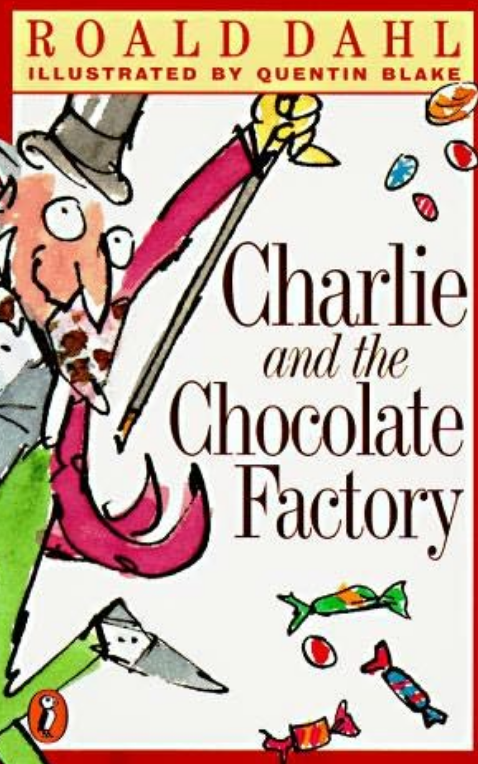
To do this you will need to eat a regular supply of Roald Dahl’s novels. I suggest a page at a time, taken once before meals, and washed down with a nice glass of rosé in the summer, and a pint of Guinness at winter.  Charlie and the Chocolate Factory is the obvious choice; Henry Sugar has its merits too. You will soon find that, hey presto! you have morphed into the world’s favourite children’s author, and will not be able to move for the queues round your front door. 
 
If you're feeling daring you can season with a dash of Jacqueline Wilson. I've not yet dared try David Walliams.

2. Grow an extra hand.

You will find this immensely useful: firstly, so that whilst labouring over proofs, you can make yourself one of the three thousand coffees that you’ll find yourself needing per day. Secondly, so that at school book signings, you can double your rate and therefore sell more than twelve copies. An implant taken from a stem cell should do the trick: but I warn you, three lots of pins and needles is not a happy feeling.

3. Research Themarket.

Themarket is a lovely, huge, mysterious town located in the middle of Nobody’s Sure and Last Year. The most important thing you can do as a new writer is to embark on some serious research of this wonderful place, whose citizens know exactly what books they want to read and when and why. This also has the seriously useful benefit of being tax efficient - you can claim your expenses for your stay in Themarket and set them against your advance, rendering it negative - so the taxman has to pay you!

4. Have a Thing.

Many writers these days find themselves floundering for lack of a Thing. How are you meant to do interviews and so on if you don’t have a Thing? Rest assured, that now we are exploring the galaxy, it’s much easier to find and care for an extraterrestrial parasite that imitates other people. You can also have fun with all the paranoia it generates when your sales rocket and all the other authors cower in terror!


5. Network.

I find that by laying down some railway tracks every day - it doesn’t matter where - people can move about more easily, and thus have more time and space to go and buy books, preferably your own. You can build up many different kinds of networks - some like to sit by the beach, weaving fishing nets that they then unpick at night. I’ve known some authors even develop a special silk gland so that they can garland their publishers’ offices with thick, sticky webs. Most useful when you need to talk to your editor!

6. Have a cover story.

Ten, fifteen, twenty years into your career, probably at your own funeral, you will still be having this conversation:

Cheery Guest: [finishes telling you about his job] So what do you do then?

Author: [calculates frantically. Settles on:] I’m a writer.

Cheery G: Oh what, are you published?

Author: Er… yes.

Cheery G: Anything I’d have heard of?

Author: [thinks: well, how am I meant to know the answer to that?]

It is at this point that you can let your imagination run wild. I love telling people that I write manuals for a particular kind of gadget that helps tractors improve their efficiency. It’s always a knockout! Follow this advice, and you’ll be the belle (or beau) of the ball!

7. Don’t forget to write.

Finally, my most pertinent piece of advice is this: don’t forget that you are actually a writer, and do enjoy putting weird symbols together in the right order to make some kind of sense.

Make sure, then, that you allocate a time of day to write - preferably one that’s the most inconvenient to your family and friends. I find that dishwasher-unloading time is a great moment to rush off a do a chapter or so, whilst the chinks of china being put away sound merrily in the far distance. Good, thick earplugs work well for this too - and, recently, I've found a pair of old-fashioned horse blinkers, so that even if people are gesturing at you, you can't see them! Within a mere fortnight or so you'll have a good solid draft, and a brilliant added benefit - nobody will want to talk to you either!