
It's been a bookish year for me, quite literally, as February saw the publication by Alma of The Double Axe, my re-imagining of the Minotaur myth; and May brought the final volume of my Darkening Path trilogy, The King's Revenge, published by Troika. These were my fifth and sixth novels for children, respectively, and I have been working on the next ones too. There has still, somehow, been time for reading, though I have been not doing as much reviewing.

Fiction
Paul Murray's The Mark and the Void is full of wickedly clever sideswipes at the banking crisis; set in Ireland, it's both exciting and stimulating. I also enjoyed Meg Rosoff's Jonathan Unleashed, which sees a young man seeking love in New York - only his life is quietly influenced by his dogs. Susan Hill's The Travelling Bag was full of terrifying revenants: the final story being very finely conceived and executed, reminiscent of the weirdness of Robert Aickmann.
Non Fiction
I haven't read much this year, on account of still being embroiled in Robert Tombs's epic history of the English, and Norman Davies' enchanting accounts of lost kingdoms; not to mention my never-ending engagement with Pepys; but I have been very much enjoying Frances Wilson's lush biography of Thomas de Quincey, Guilty Thing; and Edmund Gordon's life of Angela Carter is visceral and lively. Published recently in paperback was Peter Stothard's Alexandria: The Last Days of Cleopatra, a magnificent memoir cum biography cum travelogue about how things work, how history is made, and how reflections occur through time.
I haven't read much this year, on account of still being embroiled in Robert Tombs's epic history of the English, and Norman Davies' enchanting accounts of lost kingdoms; not to mention my never-ending engagement with Pepys; but I have been very much enjoying Frances Wilson's lush biography of Thomas de Quincey, Guilty Thing; and Edmund Gordon's life of Angela Carter is visceral and lively. Published recently in paperback was Peter Stothard's Alexandria: The Last Days of Cleopatra, a magnificent memoir cum biography cum travelogue about how things work, how history is made, and how reflections occur through time.
Poetry
The publication of Seamus Heaney's Aeneid Book VI brought this flawed but beautiful version to light. Somehow both solid and shadowy at the same time, it inspires new life into the Augustan visions of Virgil, and resonates with our inevitable fate. Alice Oswald's Falling Awake plays with form in its attempts to represent time itself: the verse brims with taut, beautiful imagery.
Classics
 I had a George Eliot year, beginning with Middlemarch, which must rank amongst one of the best novels ever written. Psychologically acute, expansive, witty and intelligently observed, moving like a symphony with grand moments, intimate ones, gentle ones and tragic. I followed it with The Mill on the Floss, which physically moved me to tears as the great flood sweeps away the mill and its inhabitants. This was somewhat lightened, fortunately, by Silas Marner, the story of an old man given new life by a child. I'm now girding my loins for Romola, which has been eyeing me from the shelf for ages.
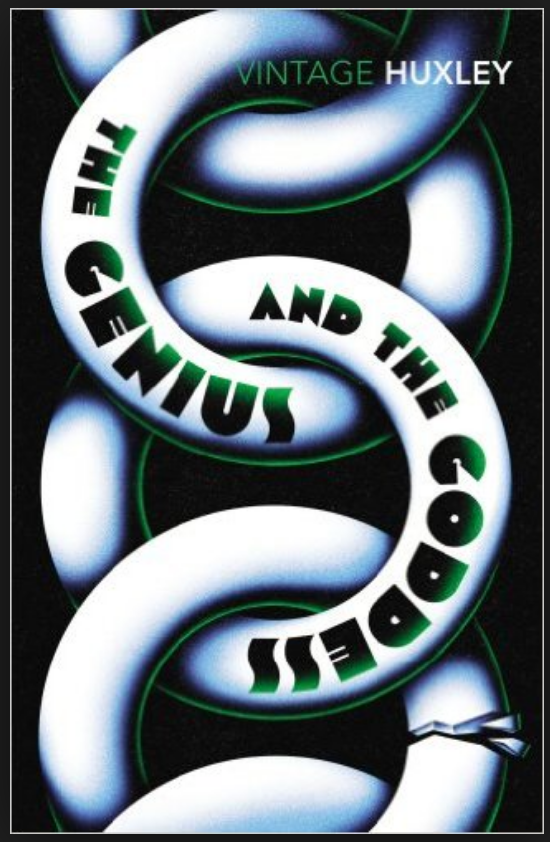
I have also been rediscovering Aldous Huxley, reading The Genius and the Goddess, a wondrous novella about memory and narrative; and Time Must Have a Stop, about a young man's coming of age in Italy. Both reissued by Vintage in smart new covers.
And I finally read Ford Madox Ford's The Good Soldier, with its latent power and mystery: a fragmented, urgent masterpiece about love and honour. A disappointment, however, was Wyndham Lewis's The Revenge For Love: a novel about appearances and reality, a savage satire against all its characters, and with a Peake-esque artist's eye for the visual; but the overall sense is one of almost impenetrable
density.
Children's and Young Adult Fiction
It's been an all round excellent year for children's fiction. Ruta Sepetys's Salt to the Sea is a masterpiece of its kind, brutal and tender and poignant, telling the story of a band of refugees racing to reach a ship. Based on a real-life humanitarian disaster in the Second World War, it's harrowing and gripping.
The Nest by Kenneth Oppel sees a boy given a terrible choice: accept his new brother with congenital defects, or receive an entirely new one, free of faults. It's a knotty, nerve-racking read; similarly, Peadar O'Guillin's debut The Call is a dark fantasy that promises very well for his next work.
For younger readers, I have already mentioned the sweetly brilliant debut of Sylvia Bishop, Erica's Elephant, in which a young girl must rescue a pachyderm from officialdom. Another debut, Lucy Strange's The Secret of Nightingale Wood, stood above the crowd with its assured prose and tender narrative. Piers Torday's There May Be a Castle both thrills and plays with conventional assumptions about children's books. I also admired A F Harrold's haunting A Song From Somewhere Else, in which the other spills into the everday; and I can't not mention the latest installment in the brilliant Lockwood series by Jonathan Stroud: The Creeping Shadow is a huge, highly enjoyable delight.
For younger readers, I have already mentioned the sweetly brilliant debut of Sylvia Bishop, Erica's Elephant, in which a young girl must rescue a pachyderm from officialdom. Another debut, Lucy Strange's The Secret of Nightingale Wood, stood above the crowd with its assured prose and tender narrative. Piers Torday's There May Be a Castle both thrills and plays with conventional assumptions about children's books. I also admired A F Harrold's haunting A Song From Somewhere Else, in which the other spills into the everday; and I can't not mention the latest installment in the brilliant Lockwood series by Jonathan Stroud: The Creeping Shadow is a huge, highly enjoyable delight.

