Showing posts with label books of the year. Show all posts

Tuesday, 2 January 2018

Books of the Year: 2017

I have written elsewhere about my children's books of the year, and have been reviewing more children's books than usual this year; most of my reading has been to do with the children's literature course I've been teaching, and I have enjoyed revisiting Lewis Carroll, J M Barrie, C S Lewis, J R R Tolkien, J K Rowling and others, and developing and tracing connections between them.

Here, then, are my three fiction choices for 2017:

Missing Fay by Adam Thorpe

A compelling, sensitive novel about the disappearance of a schoolgirl. Both intelligent, emotionally charged and gripping, Thorpe surely ranks as one of our best novelists. 


House of Names by Colm Toibin

Though it is difficult to turn the marbled horrors of Greek Tragedy into fiction, Toibin makes a good stab at it with this, in which Euripidean uncertainty treats the story of Agamemnon, Clytemnestra and Orestes, with shades of the Troubles in the background.

Norse Mythology by Neil Gaiman

Gaiman's light touch imbues these icy, strange stories with new life, smooth and wry.

A book I managed to finish this year (all 1,000 pages or so of it) was Robert Tombs's magnificent The English and their History: a book which anyone with an interest in history or the way things have unfolded should read, all told in lucid, flowing prose. I've also been enjoying the Penguin Monarchs series, with a lively biography of Queen Victoria by Jane Ridley, and Tom Holland's evocative account of Athelstan. I look forward to more of these this year. 

I also recommend Bruno Bettelheim's study of fairy tales, The Uses of Enchantment, which has provided meat for much debate; and Patrick Leigh Fermor's account of his walk across Europe, A Time of Gifts, a book I have been meaning to read for years, and which I finished on New Year's eve, sitting before a fire, and about to set out on a journey.

Those of you who pay attention to my Books of the Year will remember that I have been reading Pepys for about ten years: I am still reading Pepys, though I have now got beyond the Great Fire. It's an excellent companion in the small hours: not much can be wrong with a world in which Pepys can be pleased with buying a new coat, or eating a particularly fine pie.

Wednesday, 4 January 2017

Books of the Year 2016

It's been a bookish year for me, quite literally, as February saw the publication by Alma of The Double Axe, my re-imagining of the Minotaur myth; and May brought the final volume of my Darkening Path trilogy, The King's Revenge, published by Troika. These were my fifth and sixth novels for children, respectively, and I have been working on the next ones too. There has still, somehow, been time for reading, though I have been not doing as much reviewing.
Fiction

Paul Murray's The Mark and the Void is full of wickedly clever sideswipes at the banking crisis; set in Ireland, it's both exciting and stimulating. I also enjoyed Meg Rosoff's Jonathan Unleashed, which sees a young man seeking love in New York - only his life is quietly influenced by his dogs.  Susan Hill's The Travelling Bag was full of terrifying revenants: the final story being very finely conceived and executed, reminiscent of the weirdness of Robert Aickmann. 

Non Fiction

I haven't read much this year, on account of still being embroiled in Robert Tombs's epic history of the English, and Norman Davies' enchanting accounts of lost kingdoms; not to mention my never-ending engagement with Pepys; but I have been very much enjoying Frances Wilson's lush biography of Thomas de Quincey, Guilty Thing; and Edmund Gordon's life of Angela Carter is visceral and lively. Published recently in paperback was Peter Stothard's Alexandria: The Last Days of Cleopatra, a magnificent memoir cum biography cum travelogue about how things work, how history is made, and how reflections occur through time.

Poetry

The publication of Seamus Heaney's Aeneid Book VI brought this flawed but beautiful version to light. Somehow both solid and shadowy at the same time, it inspires new life into the Augustan visions of Virgil, and resonates with our inevitable fate. Alice Oswald's Falling Awake plays with form in its attempts to represent time itself: the verse brims with taut, beautiful imagery.

Classics

I had a George Eliot year, beginning with Middlemarch, which must rank amongst one of the best novels ever written. Psychologically acute, expansive,  witty and intelligently observed, moving like a symphony with grand moments, intimate ones, gentle ones and tragic. I followed it with The Mill on the Floss, which physically moved me to tears as the great flood sweeps away the mill and its inhabitants. This was somewhat lightened, fortunately, by Silas Marner, the story of an old man given new life by a child. I'm now girding my loins for Romola, which has been eyeing me from the shelf for ages.

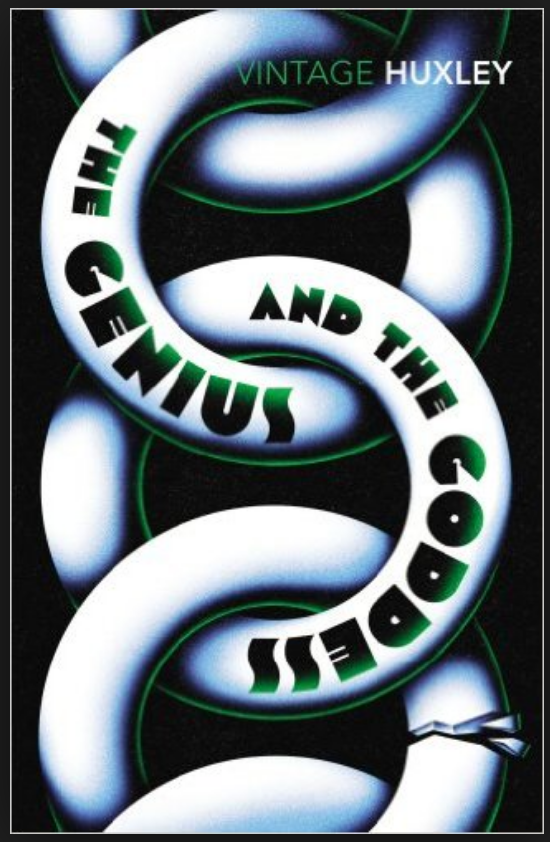
I have also been rediscovering Aldous Huxley, reading The Genius and the Goddess, a wondrous novella about memory and narrative; and Time Must Have a Stop, about a young man's coming of age in Italy. Both reissued by Vintage in smart new covers.

And I finally read Ford Madox Ford's The Good Soldier, with its latent power and mystery: a fragmented, urgent masterpiece about love and honour. A disappointment, however, was Wyndham Lewis's The Revenge For Love: a novel about appearances and reality, a savage satire against all its characters, and with a Peake-esque artist's eye for the visual; but the overall sense is one of almost impenetrable
density.

Children's and Young Adult Fiction

It's been an all round excellent year for children's fiction. Ruta Sepetys's Salt to the Sea is a masterpiece of its kind, brutal and tender and poignant, telling the story of a band of refugees racing to reach a ship. Based on a real-life humanitarian disaster in the Second World War, it's harrowing and gripping. 

The Nest by Kenneth Oppel sees a boy given a terrible choice: accept his new brother with congenital defects, or receive an entirely new one, free of faults. It's a knotty, nerve-racking read; similarly, Peadar O'Guillin's debut The Call is a dark fantasy that promises very well for his next work.

For younger readers, I have already mentioned the sweetly brilliant debut of Sylvia Bishop, Erica's Elephant, in which a young girl must rescue a pachyderm from officialdom. Another debut, Lucy Strange's The Secret of Nightingale Wood, stood above the crowd with its assured prose and tender narrative. Piers Torday's There May Be a Castle both thrills and plays with conventional assumptions about children's books. I also admired A F Harrold's haunting A Song From Somewhere Else, in which the other spills into the everday; and I can't not mention the latest installment in the brilliant Lockwood series by Jonathan Stroud: The Creeping Shadow is a huge, highly enjoyable delight.

Saturday, 2 January 2016

Books of the Year 2015

It's been a busy year, what with writing The King's Revenge and The Double Axe, and plotting the latter's sequel; not to mention other projects and the demands of that thing called Life. Nevertheless I have been reviewing and reading steadily, and these are the books that have particularly caught me over the last year. 

Benjamin Wood: literary thriller
Fiction

It may seem odd to start with an omission, but I've been much looking forward to Paul Murray's The Mark and the Void, and alackaday have yet to be able to start it; it's first on my list for this year. On to what I did read: Benjamin Wood's second novel, The Ecliptic, was an intelligent and able literary thriller about art and the processes of creation. Tessa Hadley, always elegant and finely-tuned, discussed family politics in The Past, full of gorgeous moments humming with delicacy and power. However strange Kazuo Ishiguro's The Buried Giant may have been, it was still intriguing in its use of the Matter of Britain and its understanding of humanity and memory. For pure enjoyment there was Martin Millar's The Goddess of Buttercups and Daisies, a clever romp set in ancient Athens; and David Mitchell's bonkers horror story, Slade House, featuring transdimensional immortals that eat your soul. Also splendidly entertaining is my friend Catriona Ward's terrifying Rawblood, a post-modern Gothic mash up which will have you checking behind your shoulders on even the sunniest of days. Rock on!

Children's and Young Adult Fiction

It was a good year for children's fiction, led by Sally Gardner's The Door that Led to Where, a moving account of a damaged young man who finds solace in time travel. Frances Hardinge's The Lie Tree is her finest novel to date: a delicious mixture of thrilling revenge narrative, feminism, natural science and askew realities. Philip Reeve's Railhead is a slick space opera with hints of Blade Runner, seeing a young boy, set to steal from the imperial family, discovering something much more dangerous at play. Cressida Cowell's How to Fight a Dragon's Fury was a perfect end to a much-loved series, taking its place amongst the classics of children's literature. And The Story of King Lear by Melania G Mazzuco, in Pushkin Press's "Save the Story" series, was a dark, moving version of what is, in my view, Shakespeare's greatest tragedy. 

Recent Non Fiction

I haven't read much non-fiction this year, being engaged upon a wade through Robert Tombs' magnificent The English and their History, but I did finally manage to get to Sandie Byrne's The Unbearable Saki, a fine biography and critical study of the soigné short story writer, which suggests that the apparent effeteness of his heroes is in fact all a part of his conservatism. I must also recommend The Oxford Companion to Children's Literature, which I reviewed for The Times Literary Supplement - edited by Daniel Hahn, it makes a useful and entertaining guide to a field of literature expanding in many interesting ways.
Recent Fiction

Jennifer Egan's A Visit from the Goon Squad is funny, tender and skewers modern life with glee. I became obsessed, briefly, with Robertson Davies, devouring The Cornish Trilogy and The Deptford Trilogy in a matter of weeks, and I thoroughly recommend them to anyone looking for a hearty, brainy feast. Paul Kingsnorth's The Wake is rather an extraordinary piece of work: told in a shadow version of Anglo Saxon, it follows a displaced Saxon as the Normans begin their reign of terror.
Recent Children's Fiction

I missed all the fuss about Kevin Brooks' The Bunker Diary when it won the Carnegie: it's a marvellous book, threatening, menacing, involving; its ending may be bleak but that is an inherent part of its structure and composition; it is by no means gratuitous. Melvin Burgess' Junk is a brilliant account of two teenagers who become heroin addicts: convincing, funny, scary and poignant, it both conforms to and breaks the boundaries of children's fiction. I've also been feeding my Catherine Fisher addiction, hoovering up Corbenic - surely a minor masterpiece of Arthurian fiction - and Incarceron, which features a mysterious prison and a world controlled by computers to resemble a medieval castle. Splendid, and Fisher should be much more widely known and read. 

Classics

By far the best classic I've been reading this year is George Eliot's Middlemarch; but, on January 2nd, I have still got 100 pages to go, so I can't really count it. Turgenev's Spring Torrents and Fathers and Sons are both beautiful novels; the one infused with youthful spirit; the other with an elegiac tenderness. I would also count Russell Hoban's Riddley Walker as a modern classic - its weird post-apocalyptic visions stayed with me for days, nay weeks, afterwards.

Classic Children's Fiction

Elizabeth Taylor's Mossy Trotter was a funny, exquisitely observed story about a little boy's daily travails (including being forced to have a birthday party). And I cannot believe that I have got through life so far without having read Alan Garner's Elidor - superb, sharp, strange, a take on Childe Roland that throbs with mysterious and electric power. Similarly, Robert Westall's The Machine Gunners is a violent, unflinching account of how children act when they are not observed. I always return to Ursula Le Guin, and have been using A Wizard of Earthsea to teach: I re-read it this year, and it is still one of the most thoroughly imagined, firmly-constructed, wise and vivid pieces of fiction for the young that there are. Out of 12 students, only one liked it, which rather shocked me - this book came before Harry Potter, and is so much more interesting, thematically, than its shadows. Finally, I re-read Ted Hughes' The Iron Man with a young boy not particularly interested in reading - the effect on him was as if a spell had been cast - we read it together, without stopping, for an hour, totally absorbed in its galactic, poetic struggle. 


Saturday, 3 January 2015

Books of the Year for 2014

A Happy New Year to One and All! And herewith are my books of the year, for 2014.

Fiction

Hermione Eyre's first novel, Viper Wine, was a dazzling exploration of time travel and beauty, set in the Carolingian court; whilst Constantine Phipps' What You Want brought didactic epic poetry into the twenty-first century with all guns blazing. I also very much enjoyed Nick Harkaway's Tigerman, a techno-fantasy about a dying colony; and Mal Peet's The Murdstone Trilogy is a clever and hilarious exploration of the book world and the fantasy genre. Whilst I have been steadily catching up on Hilary Mantel's backlist, I found her short story collection, The Assassination of Margaret Thatcher, sinisterly gripping. And, though I haven't yet finished it, Paul Kingsnorth's The Wake, written in an approximation of Anglo-Saxon, is brutal, bold and satisfying.


Poetry

I haven't read much poetry this year, but Lavinia Greenlaw's A Double Sorrow, which is a retelling of Troilus and Cressida, was moving and intelligent; and Simon Armitage's play, The Last Days of Troy, has many witty touches whilst keeping the grandeur and terror of the original story.

Children's Books

There were two stand out books (for me) this year: Sonya Hartnett's The Children of the King, a wise, beautiful novel about ghosts and family; and David Almond's A Song for Ella Grey, in which the singer Orpheus returns to the world - this time, to the north of England. A special mention should go to Kate Saunders' Five Children on the Western Front, which poignantly follows on from E Nesbit's classic; and finally, Diana Wynne Jones' last book, The Islands of Chaldea, which displays her distinctive wisdom and emotive power. 

Classics

I finished Ford Madox Ford's Parade's End, with The Last Post, a gentle yet dazzling coda; I also continued my Henry Green obsession, with Nothing and Doting, both of which have the uneasy pull of Green at his best. Aldous Huxley's After Many a Summer I revisited, and was once more shocked by its final image, of an ancient, practically immortal Earl who has reverted into monkey form. Pendennis by William Thackeray is a sharp, precise satire about a young man seeking his fortune in literary London, which still remains vivid and on the point today; and T H White's The Goshawk, a bleak and powerful book about the author's relationship with his bird of prey.


Friday, 3 January 2014

Books of the Year for 2013

Parade's End: still enthralling
As 2013 gets put away into the cupboard, and 2014 sits quietly in its box waiting to be opened, it's time for my annual list of my books of the year. I haven't done as much reviewing this year as usual, what with judging the Costa Children's Book Award, amongst other things, but a few new books did strike me as being worth a look.

Otherwise, I've been continuing to read Peter Dickinson, discovering his Changes trilogy , in which Merlin returns to England, casting a spell over the whole island. Ford Madox Ford's Parade's End series has held me in thrall; I've the final book in the sequence to finish this coming year. I've also been catching up on Hilary Mantel, Don DeLillo, and the two Fitzgeralds, Penelope and F Scott. Those early Mantel novels are darkly, acidly wonderful; Don DeLillo's prose is a thing of chiselled, crazy beauty; Penelope Fitzgerald I could rave over for days; but I must admit to being a little disappointed with F Scott's first novel. It had moments of mercurial brilliance, though, and is still worth looking at.

I can heartily recommend reading Shakespeare on your iPhone - for some reason, the plays seem to fit the screen very nicely.


Fiction
 
My two favourite novels of the year were both clever and playful takes on fiction and writing. First Novel by Nicholas Royle saw an extremely unreliable narrator's past come to light in gripping fashion.

Strange Bodies by Marcel Theroux was a highly enjoyable sci-fi-ish romp containing enough golems, Dr Johnson references and layers of narrative to keep anyone happy. 

I also enjoyed the return of Nigel Williams, with Unfaithfully Yours, a witty and dark epistolary novel; and John Harwood's The Asylum was a welcome addition from the Gothic master. Neil Gaiman's selection of fantastical stories, Unnatural Creatures, introduced me to many writers I hadn't come across before - in particular, Peter S Beagle, whose story about a bored aristocrat inviting Death to her ball was both moving and beautiful.

Anna Stothard's third novel, The Art of Leaving, is a well-textured, finely-organised thing: evocative of damp, dirty Soho, it tells the story of a girl who can't stay with men. Her fantasies and her growing suspicions are played out amongst a wonderfully-realised London. And, although it didn't come out this year, I was pleased to discover Benjamin Wood's The Bellwether Revivals - a mightily accomplished first novel, set in Cambridge, which manages to avoid all the usual Oxbridge novel clichés and is both well-constructed and involving.

Also recommended is a little experiment: Paul Griffiths' Let Me Tell You (2008), which takes the words of Ophelia in Hamlet and makes something original and strange out of them. (I came across a mention of it in a review by Adam Mars-Jones in the London Review of Books this August.)


Non fiction

The Real Jane Austen by Paula Byrne is a lively reappraisal of the novelist, putting her into the wider context of her time; C S Lewis: A Life by Alister McGrath was a little dry, but very good on explaining the importance of Christianity in Lewis' works. Horace and Me by Harry Eyres was a memoir-cum-homage to the poet with its own elegance and wit.

Poetry

The only (new) volume of poetry I've read this year is Robin Robertson's Hill of Doors; it is a thing of light and wonder.
Children's Books

I've done several children's book round ups this year, not to mention judging the Costa Children's Book award, so I will only mention one that I thought should get more attention: Ann Kelly's Runners, published by Luath Press: a carefully-wrought account of a post-apocalyptic Britain.


Sunday, 23 December 2012

Books of the Year 2012

Yuletide be here again, and with it the inevitable lists. I'm not going to do separate ones this year: here they all are, in time for any last minute Christmas shopping that you may be doing. Of course I've already done mine. Naturally. I won't be wandering the shops on Monday. At all.

Here goes:

Alan Garner: matter of Britain
Fiction of the year 2012

Boneland by Alan Garner is a very strange book, but also a very compelling one. It rounds off the story begun by The Weirdstone of Brisingamen in an intelligent and insightful manner. Highly recommended. Another literary offspring is Andrew Motion's Silver, which takes up the tale of Jim Hawkin's son as he returns to Treasure Island. It's a beautiful, glossy creature, and enthralling. Back in Tudorland we find Hilary Mantel on tingly form in Bring up the Bodies: I may be the only person in the world not to love it as much as I loved Wolf Hall, but it's still head and ruff above the rest. In the Orchard, the Swallows by Peter Hobbs is an elegant novella about imprisonment; and Deborah Levy's Swimming Home is a spookily brilliant middle-class holiday novel with a twist. Finally, Ali Smith's Artful is a dazzlingly engrossing semi-fictional meta-fiction, if there can be such a thing: her quicksilver mind and lightning connections will leave you gasping for more.

Non-fiction of the year

I've read no new non-fiction this year at all. A Natural History of Unicorns by Chris Lavers came out a while ago, but it's worth a mention - a charming, lively and enchanting account of the things that make up our conception of the unicorn. I was intrigued to learn that certain herdsmen induce their animals to grow one horn, and make them the leaders of their herds - this gives them greater power. Our horsey, gentle, mystical creature arises from a fascinating mishmash of real animals and legends. City of the Sharpnosed Fish by Peter Parsons also came out a while ago, but is a very enjoyable study of the papyrus fragments that came out of Oxyrhyncus and which don't, on the whole, contain new poems by Sappho, but do show a rich and detailed picture of ordinary life in a Hellenistic Egyptian city. Oxyrhyncus had such a hold on the imagination that the novelist Ronald Firbank wrote a scene in which Professor Inglepin reads a new Sapphic fragment: "In plain English," the professor said with some reluctance, "It means: Could not [he wagged a finger] Could not, for the fury of her feet."

Antigone at the National
Orpheus: The Song of Life by Anne Wroe is as beautiful to read and magical as its subject, whilst The Unfolding of Language by Guy Deustcher is an account of how language is how it is which will leave your brain fizzing with delight and joy.

Poetry of the year

Antigonick by Anne Carson is my overall book of the year. It's absolutely marvellous: spooky, finely-tuned and compulsive, a version of Sophocles' Antigone which powers on like a lit fuse. Sidereal by Rachel Boast  is an extraordinary debut: considered, careful, rich and multilayered, with many striking images: "Behind the house the dark rooms / in a shape called forest." Almost Invisible by Mark Strand is a series of haunting, witty and wise prose poems.

Classics of the year

Loving, Living and Party Going by Henry Green is a new source of celebration for me. These three novels are so rich, and with a sideways approach to language which compels and grips.  Party going in particular is almost indescribably good: dense yet vivid, it takes place in the confines of a railway station whilst all around the fog whirls. Green should be up there with Evelyn Waugh in the pantheon: but he's also one of those writers that I will now keep as a secret favourite, to be savoured often. The Dark Tower by Louis MacNeice is an obscure radio play which is an adaptation of the line "Childe Roland to the Dark Tower Came." A strange, dreamy experience. Another obscurer couple of classics which I have rediscovered are Craven House by Patrick Hamilton, a gas-lit study of hypocrisy in a boarding house, and The Violins of Saint Jacques, Patrick Leigh-Fermor's only novel, which tells the splendid tale of a Caribbean island ripped apart. I was reading Edmund Gosse's Father and Son in a crowded pub when someone said it must be a terribly gloomy book because of the grim photograph on the cover: how wrong could he have been. This is a seminal memoir of a youthful spirit breaking out. A special mention should also go to Robert Aickman's banjaxed ghost stories in The Unsettled Dust.

I've been re-indulging in a lot of drama this year: The Recruiting Officer by George Farquhar, which I didn't get to see at the Donmar, so read instead - boisterous fun. There are some lines in John Webster's The Duchess of Malfi which still have the power to make me stand and stare; and of course, every time I read William Shakespeare's Macbeth it's like being doused in flame and blood.

Children's Books of the Year

The Changeling by Philippa Gregory is a perfect young adult confection, featuring a devilishly handsome young monk and a beautiful, disinherited aristocrat. Frances Hardinge's A Face Like Glass is as zany and inventive as any of her books, whilst Eva Ibbotson's The Abominables is a swan song for a fine talent. Black Arts by Prentice and Weil is an intelligent thriller set in an Elizabethan London throbbing with spirits, whilst Philip Reeve's Goblins! is a delightful take on the orc-and-sword fantasy.

Caroline Lawrence's The Poisoned Honey Cake is a joy, instructive and witty about ancient Rome; and no boy worth his salt will be able to put down Atomic! by Guy Bass, a comic book mash up throbbing with kinetic energy. More eerie and strange is Fright Forest by Marcus Sedgwick; Kate Saunders' The Whizz Pop Chocolate Shop is a hilarious and clever fantasy featuring a giant talking cat - and talking wallpaper.
My book of the year, though, is threefold - I can't choose between them.  Obsidian Mirror by Catherine Fisher is a blackly brilliant fantasy containing Dr Dee, fairies, time travel and a genie; Maggot Moon by Sall Gardner is a striking and bold young adult novel; and The Diviners by Libba Bray is simply marvellous, featuring quite the best heroine to be found in young adult fiction and beyond, a gin-swilling flapper with psychic powers.

Bummer of the year

The time I spent reading Karl Ove Knausgaard's godawful memoir A Death in the Family is time I would dearly like back. How a book like this can be hailed as a masterpiece across so many countries and yet read like such a draining nightmare is beyond me. It's about as much fun as sticking red hot needles into your eyes whilst somebody drags their nails down a blackboard.

Monday, 26 November 2012

Telegraph Books of the Year 2012

I've done my books of the year for The Telegraph - take a gander here.  I'll be doing my own list at the end of the year, as usual. (Sighs, and thinks "Doesn't it come round faster every time?")

Friday, 30 December 2011

Books of the Year, Day Four: Non-Fiction

Mornin' all, and wasn't Great Expectations good last night? Well done BBC. Now, on to non-fiction - I haven't been reading much of it this year (which is probably a Good Thing), as I've been slowly wading my way through Pepys, and mostly reviewing fiction, but here's the best of what I did manage, from Henrician poets through lobsters, porn (sort of) and beasts.


Henry VIII and Anne Boleyn (still alive)

1. Graven with Diamonds: The Many Lives of Thomas Wyatt by Nicola Shulman

A beautifully written, silver-veined biography of poet Sir Thomas Wyatt, this book shows life at the court of Henry VIII with a sharp eye for detail and a nose for wit.  Wyatt's poems come alive in Shulman's hands, her analysis is both involving and throws revealing light onto her mysterious subject and his codes. Breathe in the wrong place at the Henrician court, and on your head it really would be.  Plus it's worth it for the idea that some poems were read out with the use of a squeaky bladder.

2. A Life of Privilege, Mostly by Gardner Botsford

A dominatrix. Possibly.
This is an older book - it came out in 2006, just about the beginning of my literary career; it may be a little recherché for some, as it concerns the life of a New Yorker editor, but it is a book brimming with liveliness, poignancy, and insights into the world of letters - there is a priceless scene where the young Botsford returns home with a middle-aged couple, only for a tiger-skin clad dominatrix to burst out into the room with a whip. He fled in terror.

3. Consider the Lobster by David Foster Wallace

I finally got round to reading this collection of essays by the lamented David Foster Wallace (his unfinished novel, The Pale King, is something I've yet to tackle: sometimes I look at the pile of Books to Read in my flat and have a minor panic attack). Like many, I was hypnotised by Infinite Jest as a student (somewhat, even, to the detriment of my degree). It's impossible to read this book all the way through as it's a bit like being locked in a room with someone very pedantic telling you exactly what goes into making bricks - no wait, come back, I've just got to the interesting bit, DID YOU KNOW THAT.... but take each one as it comes and you'll find his ingenuity and style everywhere - whether he's at a porn festival or a lobster market. The best essay, to my mind, is the one about the English language, which should be read by anyone interested in how to make sentences.

4. Under a Canvas Sky by Clare Peake 

Mervyn Peake: Legend
This is a lovely, warm memoir about growing up as the daughter of writer Mervyn Peake and artist Maeve Gilmore. I had the pleasure of interviewing the Peake children this year (you can read it here), as it was also the year that Titus Awakes, a continuation of the Titus series by Gilmore, came out. Whilst Titus Awakes is interesting as a document about Maeve's own life, Clare's memoir shows a life enhanced by fantasy and overshadowed by the sad illness of Mervyn, which led to his death far too young. The Titus books stand as some of the most interesting post-war fictions to have emerged - they are sui generis - and this glimpse into the world of the writer, from 'under a canvas sky', as it were, is poignant and pleasing.

5. Vast Alchemies by G Peter Winnington

Read as research into the interview, this is a brilliant biography of Mervyn Peake, published by the redoubtable Peter Owen, fluidly written and with a fascinating slant on the creator of Titus. 
 
6. A Venetian Bestiary by Jan Morris

This is a lilting, kindly monograph on the role of beasts in Venetian art, with some passages of lyricism (as when she describes the Golden Stallions.) Morris is now on Tumblr, and posts deliciously observed vignettes often. 

Pip pip, then, till tomorrow, for fiction of the year...

Thursday, 29 December 2011

Books of the Year, Day Three: Poetry

What ho! It's time for the poets. I made it my resolution to read more poetry this year, and have (mostly) succeeded; I've been reading a lot of Horace, Ovid and Propertius, finding much to enjoy in Horatian intricacy and Propertian sophistication. I also, having read an Anthony Hecht poem in an anthology, sought out a collection of his, but didn't find it as elegant or mysterious; I do now have his complete poems though, and hope to discover some gems in it. My collections of the year, then (not all of which came out this year), are as follows:


Sarpedon, carried off by Sleep and Death
1. Memorial by Alice Oswald

Truly a masterpiece. There is a poem by Stephen Spender which contains the phrase "let him not see what I see in this room of miniature Iliad"; and Oswald has captured and shrunk the Iliad with vatic brilliance, the similes, repeated, weaving in and out of the deaths of the heroes with grace and beauty, obliquely bringing to life all that the men will miss when they are dead. Here the lowliest of soldiers is given space; here the sons of kings, prophets, shepherdesses and seals are levelled by the sword, even if you are Sarpedon, son of Zeus. Cold, monumental, yet imbued with light, containing a kind of sorcery, it's not only my poetry book of the year, but most probably my book of the year.

2. Illuminations by Arthur Rimbaud, trans. by John Ashbery

Rimbaud: Angel/devil
On here rather than the classics list because of its translation by Ashbery. This is an astonishing book, published by the excellent Carcanet press. Rimbaud was a devil, or an angel; there's a fine, novelistic biography of him by Edmund White. What we must always remember is that he was barely out of his teens when he wrote; he died young, as a gun runner in Africa. The French is alive, shocking, full of startling imagery and phrases that tremble and shiver in the mind; read that first, then the opposing, almost literal translation, and you will find a spear-sharp counterpoint, or a mirror of extraordinary clarity. Apocalyptic and bright and terrible: "Ce ne peut être que la fin du monde, en avançant." "It can only be the end of the world, as you move forward." Also a close contender for actual book of the year.

3. Of Mutability by Jo Shapcott

The Costa winner presented us with a collection full of liquid, joyous poems, including a lovely piece about Ovid: "everything he touched turned to song."

4. White Egrets by Derek Walcott

Another superlative collection, at once classical and sensuous, and richly evocative. The white egrets flitter through the verse as a motif of life, freedom and the approach of death.

5. The Wrecking Light by Robin Robertson

Robertson's quiet poetry is heightened by sudden violence or interesting word choices. His poems seethe with myth, and include (obviously good for me) two versions of Ovid: Pentheus and Dionysus, which shows, capably, the frenzy of inspiration; the second is the daughters of Minyas telling each other tales - in Robertson's hands they become almost fishwivey. 'That's tedious,' one says, after the story of Pyramus and Thisbe.

6. Night by David Harsent

Smooth, elegant, with some beautiful concordances and sounds: "monstrous and moonstruck," making a fine and sensitive collection.

7. Torchlight by Peter McDonald

There is a quiet power in this collection, also published by Carcanet, focusing around a translation of the Homeric Hymn to Demeter, which McDonald renders stark and vivid. There are also many lilting, numinous works, including 'Cheetah', which celebrates transience.

That's it for today chaps, see you tomorrow for my non-fiction of the year...

Wednesday, 28 December 2011

Books of the Year, Day Two: Children's Books (and one Sci Fi novel)


Tally ho, yoicks, etc, and welcome to the brilliantly exciting Day Two of my Books of the Year. It's been rather a good year for children's and young adult books; I also thought a special mention (though I am not, as they say, "well-up" on the genre) should go to one science fiction novel (although I'm sure that the author would mutter about such a classification, but there you go.) Finch by Jeff Vandermeer, a hard-boiled noir full of betrayals and double crossings, is set on a planet taken over by mushrooms (yes, mushrooms), known as the Grey Caps. It's rich and strange, and whilst I must confess I wasn't always entirely sure who was double crossing whom, it offers an enthralling window into an alternative universe.


Right, now down to children's books.

1. Life: An Exploded Diagram by Mal Peet

This is an exceptional young adult novel, warm and poignant and entirely absorbing. As well as being a finely written, emotionally mature piece of work, it's also an intelligent enquiry into cause and consequence, a study of class and its hidebound nature after the war (Clem is a labourer's son whose father goes up in the world to work for the local squire; Clem falls in love, naturally, with the squire's daughter.) The Cuban Missile crisis looms large in Clem's imagination, and it also works as a metaphor, layered through the entire text. A sterling book from a well-established author, this should almost certainly win prizes.

2. A Monster Calls by Patrick Ness

A children's book that might have been crafted straight out of a nightmare and made solid: bursting with terrifying images and rooted in the deepest folktalkes, this warped fable also follows an involving emotional arc, and sits as a nice counterpoint to Ness's trilogy, Chaos Walking.

An Eck. About to eat something.
3. There is no Dog by Meg Rosoff

What if God was a sex-obsessed teenager called Bob? Well that would explain why the world is in such a mess, wouldn't it? It certainly makes sense; and Rosoff's quirky, intelligent and very funny tale explores the idea with verve and imagination. Oh, and it also contains the world's sweetest creature - the Eck. You'll want one, I promise. It eats everything in sight - and it's the last one in the universe.
4. David by Mary Hoffman

A marble-veined, beautifully crafted novel which sees a gorgeous young man enter into Florence to seek his fortune. His looks earn him the attention of both men and women; he also becomes embroiled in dangerous game of espionage - whilst, of course, being the model for Michaelangelo's David. Absorbing, thrilling, and full of historical sumptuousness.
5. Naked by Kevin Brooks

A very powerful, thoroughly-imagined fiction, concerning the privileged life of the daughter of an actress; she forms a band with the best looking guy in school, but he turns out to have his own problems; meanwhile she falls for the new Irish bass player, Billy the Kid - but he's tangled up in some dangerous political machinations of his own. Superlative. 
6. The Devil Walks by Anne Fine

Suspenseful, scary and absorbing, Fine's novel pushes through pastiche of the late Victorian / early Edwardian ghost story and emerges on the other side (much like Chris Priestley's Uncle Montague series.) An imprisoned, vulnerable boy; a hidden house; a Satanic doll; all these elements combine to make an unmissable tale.

7. One Dog and His Boy by Eva Ibbotson

A true delight, this was Ibbotson's last book before she died this year. It follows a young boy's quest for friendship, which he finds, in bagfulls. It's sweet and funny and charming, and the Pekinese alone is worth it - descended from dogs who guarded the Imperial Palace, he secretly nurses his fiery soul, waiting for someone to notice it.
8. The Case of the Deadly Desperadoes by Caroline Lawrence

An almost perfect children's book, this lovely tale sees a boy with Asperger's syndrome in nineteenth century America, on the run after his family is slaughtered; he becomes a detective and foils some nasty villains. It's witty and moving.
9. Sky Hawk by Gill Lewis

This debut novel augurs well for the future - Lewis writes with a keen, poetical eye, and her story is alive to the wonders of nature, and manages to be sentimental without being crass. One to watch.

10. The Power of Three by Diana Wynne Jones, Flight 714 by Hergé, and The Ropemaker by Peter Dickinson

Three older books I've read (or reread) this year that deserve a mention. Diana Wynne Jones also died this year - her children's books are inimitable. I came to them late - very late, actually, as I was still at university when I read The Dark Lord of Derkholm, and Chrestomanci, a book about a boy wizard written years before Harry Potter. I read The Power of Three this year, which concerns three different tribes who hate and fear each other - one of them, us humans, are known as giants; but when two little "fairy" children have to work with the giants to save their community, they learn that perhaps differences aren't necessarily to be scared of. It's a charming, weird book.

The same kind of weirdness, but magnified, can be found in Peter Dickinson's The Ropemaker; I'd never heard of him, but a chance remark by Marion Lloyd as we discussed writing children's books put me on to it: it should be read immediately by anyone interested in children's books. It inhabits its own world so thoroughly that it's almost impossible to put down; and it has the best grumpy horse in it I've ever come across. And, last but not least, after a wedding conversation I went back to Hergé, and found in Flight 714 all the thrills and humour that kept me enthralled as a child.


Tuesday, 27 December 2011

Books of the Year, Day One: Classics

Merry Christmas to you, and God Bless You, One and All! (Flings away crutches, downs eggnog, kisses unsuitable person under mistletoe, passes out with paper crown over one eye.) Well I hope you all enjoyed your Christmas. Mine was distinctly unbookish (apart from dipping into Samuel Pepys); to rectify the matter I am returning to my books of the year round ups, which I hope will become a tradition as Yuleish as weeping over the Doctor Who special. (What? I didn't do that! Not me, guvn'or.) To start with, here are my Classics of the Year.

1. Vathek by William Beckford 

Published by Oxford Classics, this is insane, terrifying and brilliant, concerning the Caliph Vathek, who meets an ugly stranger; said stranger promises him untold power and the knowledge of the pre-Adamite sultans; meanwhile, his Satanic mother Carathis gloats and commits various atrocities with her mute negresses. It veers from extreme farce (when Vathek shoves, one by one, fifty of the most beautiful of his subjects' children off a cliff) to madness (Koran-quoting dwarfs, anyone?). It's, basically, totally cool. Beckford was 20 when he wrote it, and it's my Classic of the Year for its complete and utter disregard for narrative and, well, anything, but yet managing to be scintillating. The bit where the mute negresses run into the marsh looking for poisonous weeds; the bit where Carathis storms around hell; the bit where people are being tortured for eternity with their hearts set on fire - just go and read it, you won't regret it.

2. The Iliad by Homer (trans. Stephen Mitchell)

Some thought this new version (see comment below) too colloquial - would Achilles, asked The Economist drily, really say "I don't give a damn about that man?" I think he probably would. Mitchell retained the grandeur of the original, whilst injecting it with some zest and spice - an excellent version for those who haven't yet been introduced to the wonders of Homer.

3. The Rape of the Lock by Alexander Pope

"The moving toyshop of the heart..." A fabulous little satirical epyllion, ordered yet chaotic, lovely, shocking, sharp and warm all at the same time, it left me longing for a twenty-first century Pope.

4. Eline Vere by Louis Couperus

Printed by the stalwart Pushkin Press, the cover of this beautiful edition shows a woman draped in a kimono, made inert by ennui, as is Eline Vere herself. The Dutch Couperus was revered in his time; his highly realistic novels drip with detail, as gorgeously and tightly rendered as a painting of his countryman's. The riotous characters and scenes in this book seemed to be so close to us in spirit and temperament, so much more so than the aristocrats of War and Peace, or the WASPs of Edith Wharton; there is a naughtiness, an impishness in his prose which I found very touching. Eline Vere herself is a complicated heroine (if one can call her that), and reading this you sometimes feel as if you've overdone it on the cherry brandy, but it's entirely worth it to become wholly immersed in a world both familiar and strange. There is a Dutch film, but if anyone knows if there's one with English subtitles (my Dutch being, er, non-existent), I'd be grateful.

5. Electra by Sophocles, The Libation Bearers by Aeschylus, Philoctetes by Sophocles 

This was the year I returned to Greek tragedy. There is something in the searing purity of Sophocles that cannot be garnered anywhere else; and the cosmic otherworldliness of Aeschylus feels like looking into a clouded mirror, back into the depths of our civilisation from which spring these extraordinary tales. The Philoctetes in particular I have been enjoying, finding in its tale of isolation, friendship and civilisation something that resonates widely, it being perhaps the most 'modern' of Sophocles' plays (containing, as it does, a meta-textual play directed by Odysseus). But lurking behind its resolution lies the future fall of Troy - and in that is the genius of Sophocles. I also highly recommend the version of Philoctetes by Seamus Heaney: The Cure at Troy, which adds an eeriness.

6. Decline and Fall by Evelyn Waugh

Every time I read this I find it more savage. The murder of Mr Prendergast by the lunatic! The deaths of onlookers at the wedding of Paul and Margot! Almost every paragraph is laced with venom and wit, and it never gets any less fresh. I also read The Ordeal of Gilbert Pinfold again this year, but found it hasn't lasted nearly as much - I think because its "trick" seems so outdated. It's something you need to look at in the context of its time, whereas Decline and Fall stretches its black limbs across the centuries, settling in for good.

7. The Chrysalids by John Wyndham

This occupies a special place in my mental furniture, much like an old rockinghorse, having responded warmly to it as a child: its tale of young clairvoyants terrified of being found out for fear of death is both thrilling and poignant. And God I wish I was a mind-reader. It would make writing novels so much easier.


8. How Many Miles to Babylon by Jennifer Johnston

A little-known, and overlooked, novella, about the friendship between an Anglo-Irish aristocrat and a labourer on his lands; they come together in the trenches of the First World War, but their friendship does little but tear them apart as others misconstrue it. Written in sometimes quite oblique prose, it nevertheless manages to sear its imagery onto the brain.

9. Offshore by Penelope Fitzgerald

The first Fitzgerald I've read - and why don't people read her more? This is a slim book but it contains within it more intelligence, wit, vividness and awareness of humanity than most. It concerns the lives of a group of houseboaters and is often quite nightmarish in its piercing lyricism.


10. A Favourite of the Gods by Sybille Bedford

Published by Daunt Books, this deserves a mention both because Daunts are doing a great job of bringing out neglected books, and also because you can see what a great writer Bedford would become. This novel is very curate's-eggish; the opening chapter is peerless, but the bits in between can be remarkably stilted. However, it is worth persevering with just to see how a writer forms herself.

Pip pip, then, till tomorrow...


Sunday, 11 December 2011

Daily Telegraph Children's Books Special: Interview with Jacqueline Wilson, and review round ups

The Daily Telegraph Children's Books Special was published on Saturday; it's now available online. I've done a bunch of things for them: an interview with Jacqueline Wilson, in which she talks about Hetty Feather; and round ups of the best historical, humorous and real life books of the year, including Meg Rosoff, Mal Peet, Kevin Brooks (a new treat for me), David Walliams, Eva Ibbotson and many others.

Thursday, 2 December 2010

Inkblots, Jelly and a Hungry, Hungry Hippogriff


I haven't had anything in the Telegraph for a while, and now two pieces come along at once... First is a gift book round up, which takes in everything from inkblot tests to manuals on knitting dogs, with detours into jelly, bikes, royal alligators and annoying meerkats. HERE is a link.

And also Russell Hoban's new book. I haven't actually read any of his other books - everyone tells me I must read Riddley Walker - but this extraordinarily odd little novel has certainly piqued my interest. Click HERE. The book takes as its premise the idea that the hippogriff from Ariosto's romance poem Orlando Furioso is in love with Angelica; he bursts into twenty-first century America in order to find her. As someone who has grappled with Orlando, and is currently re-making his way through The Faerie Queen, as the basis for a novel (for me at any rate) it's got to be a good one. A talking hippogriff beats a talking meerkat any day... (Pictured is one of Gustave Dore's etchings from OF.)

Tuesday, 30 November 2010

Daily Telegraph: Children's Books of the Year


More wondrous news: The Liberators has been selected as one of the Daily Telegraph's Children's Books of the Year, alongside Chris Riddell, Julia Donaldson, Charlie Higson et al. Huzzah and hurrah! HERE is a link.

Sunday, 28 November 2010

Tablet Books of the Year


Here is my Book of the Year for The Tablet: if you can't read the picture (it's not very clear), it is, of course, Skippy Dies by Paul Murray.

Saturday, 20 November 2010

Daily Telegraph Books of the Year

HERE is a link to my books of the year, as listed in the Daily Telegraph. I'm going to post a longer list next week. I'm somewhere near the bottom...