Showing posts with label paul murray. Show all posts

Wednesday, 4 January 2017

Books of the Year 2016

It's been a bookish year for me, quite literally, as February saw the publication by Alma of The Double Axe, my re-imagining of the Minotaur myth; and May brought the final volume of my Darkening Path trilogy, The King's Revenge, published by Troika. These were my fifth and sixth novels for children, respectively, and I have been working on the next ones too. There has still, somehow, been time for reading, though I have been not doing as much reviewing.
Fiction

Paul Murray's The Mark and the Void is full of wickedly clever sideswipes at the banking crisis; set in Ireland, it's both exciting and stimulating. I also enjoyed Meg Rosoff's Jonathan Unleashed, which sees a young man seeking love in New York - only his life is quietly influenced by his dogs.  Susan Hill's The Travelling Bag was full of terrifying revenants: the final story being very finely conceived and executed, reminiscent of the weirdness of Robert Aickmann. 

Non Fiction

I haven't read much this year, on account of still being embroiled in Robert Tombs's epic history of the English, and Norman Davies' enchanting accounts of lost kingdoms; not to mention my never-ending engagement with Pepys; but I have been very much enjoying Frances Wilson's lush biography of Thomas de Quincey, Guilty Thing; and Edmund Gordon's life of Angela Carter is visceral and lively. Published recently in paperback was Peter Stothard's Alexandria: The Last Days of Cleopatra, a magnificent memoir cum biography cum travelogue about how things work, how history is made, and how reflections occur through time.

Poetry

The publication of Seamus Heaney's Aeneid Book VI brought this flawed but beautiful version to light. Somehow both solid and shadowy at the same time, it inspires new life into the Augustan visions of Virgil, and resonates with our inevitable fate. Alice Oswald's Falling Awake plays with form in its attempts to represent time itself: the verse brims with taut, beautiful imagery.

Classics
I had a George Eliot year, beginning with Middlemarch, which must rank amongst one of the best novels ever written. Psychologically acute, expansive,  witty and intelligently observed, moving like a symphony with grand moments, intimate ones, gentle ones and tragic. I followed it with The Mill on the Floss, which physically moved me to tears as the great flood sweeps away the mill and its inhabitants. This was somewhat lightened, fortunately, by Silas Marner, the story of an old man given new life by a child. I'm now girding my loins for Romola, which has been eyeing me from the shelf for ages.

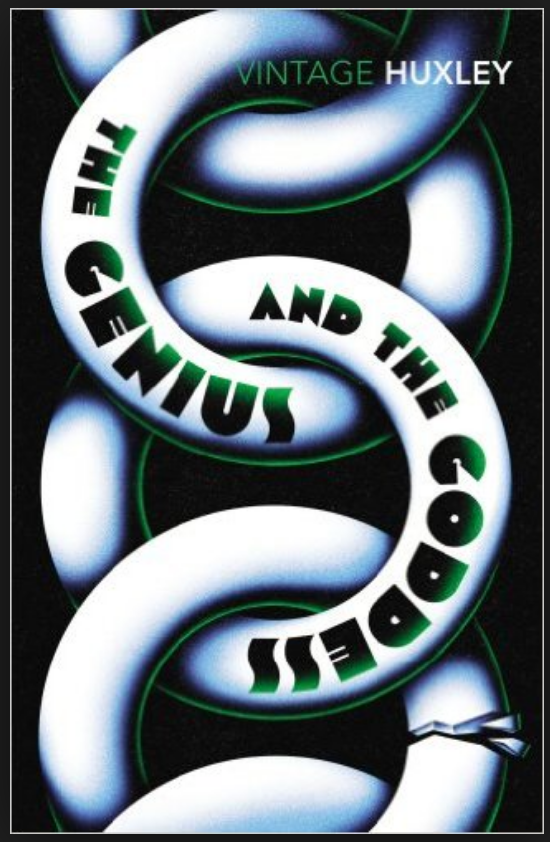
I have also been rediscovering Aldous Huxley, reading The Genius and the Goddess, a wondrous novella about memory and narrative; and Time Must Have a Stop, about a young man's coming of age in Italy. Both reissued by Vintage in smart new covers.

And I finally read Ford Madox Ford's The Good Soldier, with its latent power and mystery: a fragmented, urgent masterpiece about love and honour. A disappointment, however, was Wyndham Lewis's The Revenge For Love: a novel about appearances and reality, a savage satire against all its characters, and with a Peake-esque artist's eye for the visual; but the overall sense is one of almost impenetrable
density.

Children's and Young Adult Fiction

It's been an all round excellent year for children's fiction. Ruta Sepetys's Salt to the Sea is a masterpiece of its kind, brutal and tender and poignant, telling the story of a band of refugees racing to reach a ship. Based on a real-life humanitarian disaster in the Second World War, it's harrowing and gripping. 

The Nest by Kenneth Oppel sees a boy given a terrible choice: accept his new brother with congenital defects, or receive an entirely new one, free of faults. It's a knotty, nerve-racking read; similarly, Peadar O'Guillin's debut The Call is a dark fantasy that promises very well for his next work.

For younger readers, I have already mentioned the sweetly brilliant debut of Sylvia Bishop, Erica's Elephant, in which a young girl must rescue a pachyderm from officialdom. Another debut, Lucy Strange's The Secret of Nightingale Wood, stood above the crowd with its assured prose and tender narrative. Piers Torday's There May Be a Castle both thrills and plays with conventional assumptions about children's books. I also admired A F Harrold's haunting A Song From Somewhere Else, in which the other spills into the everday; and I can't not mention the latest installment in the brilliant Lockwood series by Jonathan Stroud: The Creeping Shadow is a huge, highly enjoyable delight.

Saturday, 2 January 2016

Books of the Year 2015

It's been a busy year, what with writing The King's Revenge and The Double Axe, and plotting the latter's sequel; not to mention other projects and the demands of that thing called Life. Nevertheless I have been reviewing and reading steadily, and these are the books that have particularly caught me over the last year. 

Benjamin Wood: literary thriller
Fiction

It may seem odd to start with an omission, but I've been much looking forward to Paul Murray's The Mark and the Void, and alackaday have yet to be able to start it; it's first on my list for this year. On to what I did read: Benjamin Wood's second novel, The Ecliptic, was an intelligent and able literary thriller about art and the processes of creation. Tessa Hadley, always elegant and finely-tuned, discussed family politics in The Past, full of gorgeous moments humming with delicacy and power. However strange Kazuo Ishiguro's The Buried Giant may have been, it was still intriguing in its use of the Matter of Britain and its understanding of humanity and memory. For pure enjoyment there was Martin Millar's The Goddess of Buttercups and Daisies, a clever romp set in ancient Athens; and David Mitchell's bonkers horror story, Slade House, featuring transdimensional immortals that eat your soul. Also splendidly entertaining is my friend Catriona Ward's terrifying Rawblood, a post-modern Gothic mash up which will have you checking behind your shoulders on even the sunniest of days. Rock on!

Children's and Young Adult Fiction

It was a good year for children's fiction, led by Sally Gardner's The Door that Led to Where, a moving account of a damaged young man who finds solace in time travel. Frances Hardinge's The Lie Tree is her finest novel to date: a delicious mixture of thrilling revenge narrative, feminism, natural science and askew realities. Philip Reeve's Railhead is a slick space opera with hints of Blade Runner, seeing a young boy, set to steal from the imperial family, discovering something much more dangerous at play. Cressida Cowell's How to Fight a Dragon's Fury was a perfect end to a much-loved series, taking its place amongst the classics of children's literature. And The Story of King Lear by Melania G Mazzuco, in Pushkin Press's "Save the Story" series, was a dark, moving version of what is, in my view, Shakespeare's greatest tragedy. 

Recent Non Fiction

I haven't read much non-fiction this year, being engaged upon a wade through Robert Tombs' magnificent The English and their History, but I did finally manage to get to Sandie Byrne's The Unbearable Saki, a fine biography and critical study of the soigné short story writer, which suggests that the apparent effeteness of his heroes is in fact all a part of his conservatism. I must also recommend The Oxford Companion to Children's Literature, which I reviewed for The Times Literary Supplement - edited by Daniel Hahn, it makes a useful and entertaining guide to a field of literature expanding in many interesting ways.
Recent Fiction

Jennifer Egan's A Visit from the Goon Squad is funny, tender and skewers modern life with glee. I became obsessed, briefly, with Robertson Davies, devouring The Cornish Trilogy and The Deptford Trilogy in a matter of weeks, and I thoroughly recommend them to anyone looking for a hearty, brainy feast. Paul Kingsnorth's The Wake is rather an extraordinary piece of work: told in a shadow version of Anglo Saxon, it follows a displaced Saxon as the Normans begin their reign of terror.
Recent Children's Fiction

I missed all the fuss about Kevin Brooks' The Bunker Diary when it won the Carnegie: it's a marvellous book, threatening, menacing, involving; its ending may be bleak but that is an inherent part of its structure and composition; it is by no means gratuitous. Melvin Burgess' Junk is a brilliant account of two teenagers who become heroin addicts: convincing, funny, scary and poignant, it both conforms to and breaks the boundaries of children's fiction. I've also been feeding my Catherine Fisher addiction, hoovering up Corbenic - surely a minor masterpiece of Arthurian fiction - and Incarceron, which features a mysterious prison and a world controlled by computers to resemble a medieval castle. Splendid, and Fisher should be much more widely known and read. 

Classics

By far the best classic I've been reading this year is George Eliot's Middlemarch; but, on January 2nd, I have still got 100 pages to go, so I can't really count it. Turgenev's Spring Torrents and Fathers and Sons are both beautiful novels; the one infused with youthful spirit; the other with an elegiac tenderness. I would also count Russell Hoban's Riddley Walker as a modern classic - its weird post-apocalyptic visions stayed with me for days, nay weeks, afterwards.

Classic Children's Fiction

Elizabeth Taylor's Mossy Trotter was a funny, exquisitely observed story about a little boy's daily travails (including being forced to have a birthday party). And I cannot believe that I have got through life so far without having read Alan Garner's Elidor - superb, sharp, strange, a take on Childe Roland that throbs with mysterious and electric power. Similarly, Robert Westall's The Machine Gunners is a violent, unflinching account of how children act when they are not observed. I always return to Ursula Le Guin, and have been using A Wizard of Earthsea to teach: I re-read it this year, and it is still one of the most thoroughly imagined, firmly-constructed, wise and vivid pieces of fiction for the young that there are. Out of 12 students, only one liked it, which rather shocked me - this book came before Harry Potter, and is so much more interesting, thematically, than its shadows. Finally, I re-read Ted Hughes' The Iron Man with a young boy not particularly interested in reading - the effect on him was as if a spell had been cast - we read it together, without stopping, for an hour, totally absorbed in its galactic, poetic struggle. 


Monday, 27 December 2010

Books of the Year: Day Two: Recent Fiction


Welcome to Day Two of my Books of the Year, and here I present to you a thick slice of contemporary fiction, taking in mysterious deaths by doughnut at Catholic boarding schools, uber-rich amoralists, ghosts, gods, surf punks, mysterious strangers, quests, more ghosts, and a Jane Austen homage. It hasn't been a vintage year for fiction, but there has been a lot of interesting stuff out there.


1. Skippy Dies by Paul Murray

I have raved about this before - lyrical, eerie, funny, this is definitely my overall book of the year.

2. The Privileges by Jonathan Dee

This is an absorbing and exciting account of an American couple's dubious ascent into the realms of billionaredom - a modern day Faust, without Mephistopheles.

3. The Little Stranger by Sarah Waters

Sarah Water's pastiche manages to be a classic ghost story, with a pervading sense of the eldritch on every page, and an ending that causes everything to be thrown into question.

3. The Infinities by John Banville

I had dreams about living in the universe portrayed in this charming, weird novel. It's set in a slightly different world to ours - the theme being that that are infinite universes, and infinite gods of the universes, who play idly with mortals and often take mortal form (hence the picture: here the Greek gods are highly significant). The novel is, like the bones in the song, rich and strange.

4. Inherent Vice by Thomas Pynchon

Completely loopy: the plot concerns a marijuana smoking detective in 70s California, who's been set to find a missing property developer. Everyone seems to be after everyone else; or maybe it's just the dope. Immensely enjoyable, even if it is as mad as several boxes of frogs.

5. In a Strange Room by Damon Galgut

Finely-constructed triptych of inter-connected stories following the emotional development of the writer ('Damon') as he travels around the world. Beautifully written, and experimental too, this is a satisfying and troubling portrait.

6. Ghostlight by Joseph O’Connor

Initially, I didn't like this very much; but as I went on, I became immensely involved in the story of an old actress looking back at her involvement with the playwright Synge - so involved as to be moved almost to tears. Delicate and elegant and powerful.

7. Rat by Fernanda Eberstadt

A warm and gripping tale of a young girl's quest through France to England to find her father; vivid and truthful.

8. Corpus by Susan Irvine

These short stories are mordant, mournful comments on the art world. Ninety per cent of them are ingenious, original and funny.

9. Kehua! by Fay Weldon

The loopiness of the plot wins it a place on the list - Weldon manages to be so much more interesting than a lot of writers around at the moment.

10. The Three Weissmanns of Westport by Cathleen Schine

This is an often hilarious homage to Jane Austen, concerning the late divorce of a seventy year old woman, and the effect it has on her and her two middle aged daughters.

11. Lights Out in Wonderland by D B C Pierre

A rollicking tale of decadence and drugs, the slightly baggy middle section can be forgiven because of the zaniness and excitement of the rest.

12. Pretty Monsters by Kelly Link

A late addition to the list (read over Christmas), these fantastical short stories show the influence of Ursula Le Guin and Diana Wynne Jones; several of them are truly brilliant, including 'The Library', about a strange TV show that only plays randomly and may or may not be a TV show: it takes place in an enormous library that has its own tundra and desert - and even boasts its own ocean.

Sunday, 28 November 2010

Tablet Books of the Year


Here is my Book of the Year for The Tablet: if you can't read the picture (it's not very clear), it is, of course, Skippy Dies by Paul Murray.