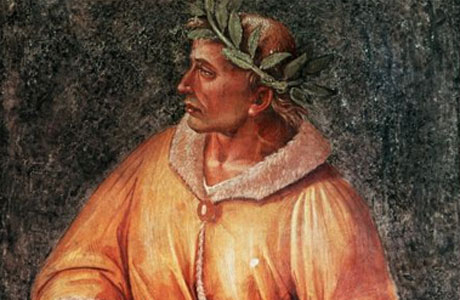
Showing posts with label Ovid. Show all posts

Wednesday, 24 September 2025

September Round Up


It's been a busy September, as autumn appears and a chill enters the air. 

I had a piece in the Spectator Schools supplement, here, on my boarding school memories, and another piece, about going to Lancing and Dorset House, which came out in the Lancing College magazine, Quad.

My Substack has been trundling along, with pieces on Ivy Compton-Burnett, Ovid's Tristia, the economics of writing books, John Lowin (an actor and contemporary of William Shakespeare), and the children's author Susan Price, whom I have recently discovered, having reviewed a reissue of her wonderful The Ghost Drum.


Thursday, 29 December 2011

Books of the Year, Day Three: Poetry

What ho! It's time for the poets. I made it my resolution to read more poetry this year, and have (mostly) succeeded; I've been reading a lot of Horace, Ovid and Propertius, finding much to enjoy in Horatian intricacy and Propertian sophistication. I also, having read an Anthony Hecht poem in an anthology, sought out a collection of his, but didn't find it as elegant or mysterious; I do now have his complete poems though, and hope to discover some gems in it. My collections of the year, then (not all of which came out this year), are as follows:


Sarpedon, carried off by Sleep and Death
1. Memorial by Alice Oswald

Truly a masterpiece. There is a poem by Stephen Spender which contains the phrase "let him not see what I see in this room of miniature Iliad"; and Oswald has captured and shrunk the Iliad with vatic brilliance, the similes, repeated, weaving in and out of the deaths of the heroes with grace and beauty, obliquely bringing to life all that the men will miss when they are dead. Here the lowliest of soldiers is given space; here the sons of kings, prophets, shepherdesses and seals are levelled by the sword, even if you are Sarpedon, son of Zeus. Cold, monumental, yet imbued with light, containing a kind of sorcery, it's not only my poetry book of the year, but most probably my book of the year.

2. Illuminations by Arthur Rimbaud, trans. by John Ashbery

Rimbaud: Angel/devil
On here rather than the classics list because of its translation by Ashbery. This is an astonishing book, published by the excellent Carcanet press. Rimbaud was a devil, or an angel; there's a fine, novelistic biography of him by Edmund White. What we must always remember is that he was barely out of his teens when he wrote; he died young, as a gun runner in Africa. The French is alive, shocking, full of startling imagery and phrases that tremble and shiver in the mind; read that first, then the opposing, almost literal translation, and you will find a spear-sharp counterpoint, or a mirror of extraordinary clarity. Apocalyptic and bright and terrible: "Ce ne peut être que la fin du monde, en avançant." "It can only be the end of the world, as you move forward." Also a close contender for actual book of the year.

3. Of Mutability by Jo Shapcott

The Costa winner presented us with a collection full of liquid, joyous poems, including a lovely piece about Ovid: "everything he touched turned to song."

4. White Egrets by Derek Walcott

Another superlative collection, at once classical and sensuous, and richly evocative. The white egrets flitter through the verse as a motif of life, freedom and the approach of death.

5. The Wrecking Light by Robin Robertson

Robertson's quiet poetry is heightened by sudden violence or interesting word choices. His poems seethe with myth, and include (obviously good for me) two versions of Ovid: Pentheus and Dionysus, which shows, capably, the frenzy of inspiration; the second is the daughters of Minyas telling each other tales - in Robertson's hands they become almost fishwivey. 'That's tedious,' one says, after the story of Pyramus and Thisbe.

6. Night by David Harsent

Smooth, elegant, with some beautiful concordances and sounds: "monstrous and moonstruck," making a fine and sensitive collection.

7. Torchlight by Peter McDonald

There is a quiet power in this collection, also published by Carcanet, focusing around a translation of the Homeric Hymn to Demeter, which McDonald renders stark and vivid. There are also many lilting, numinous works, including 'Cheetah', which celebrates transience.

That's it for today chaps, see you tomorrow for my non-fiction of the year...

Wednesday, 9 February 2011

Killed the King of the Dragon: Google Latin Translate


Ave amici! In one of Life of Brian's funniest scenes, a Roman goes up to Brian as he's graffitiing a wall. 'Romanes eunt domus', he's written. 'What's this then? People called Romanes they go the house?' He then goes on to correct him: Romani ite domum. The joke is, for Latinists, that 'domum' is not a locative, but accusative of motion towards. The locative would be domi. Still, we need people like that centurion around today. Those pointy-heads at Google have set up a translate function - for Latin. Why, you might ask. I certainly do. So I thought I'd check it out. The first thing I put in was this: draco regem necavit. Translated by me, it means 'the dragon killed the king.' Translated by Google, it comes out as 'killed the king of the dragon.' Weirdly poetic, I grant you, but wrong.

Let's try a longer sentence. Maybe it doesn't deign to do short things.

olim puer quidam et eius soror prope magnam cavernam sunt inventi.

Translated by a mere human, this means:

Once upon a time, a certain boy and his sister were found near a great cave.

Translated by a mighty machine, this comes out as:

a boy, who in times past and the sister of her near the large hole of the are to be found.

A little less than poetic, but more than piffle. So let's try some Ovid on it:

non aliter quam cum vitiato fistula plumbo scinditur et tenues stridente foramine longe eiaculatur aquas atque ictibus aera rumpit.

Your humble human brain gives you this:

Not otherwise than when a pipe with faulty lead breaks, and hissing through the hole there is a long thin water-spurt which breaks the air with its force.

Megabrain Google gives you this:

in no other way than the lead when a pipe with a hissing rent, and the thin hole of the far eiaculatur the waters of the blows, and he breaks into the air
.

A system that can't recognise consonontal 'i' is obviously faulty.

Even a phrase in common usage, 'ad hominem', comes out as 'to the man of'.

So, endless amusement for Latinists, then, but practical usage for people who actually want to read Latin? I'm afraid there's nothing there. And if you want to do your homework on it - I wouldn't bother.

Sunday, 5 December 2010

Ovid and Sophocles: They've Done it Again


The weekend was spent buried deep in various texts, for various reasons; as I truffled through them I did come up with this:

'saepe pater dixit: 'studium quid inutile temptas?
Maeonides nullas ipse reliquit opes.'

Plus ça change
. It's from Ovid, Tristia (4.10), and its translation is as follows:

'Often my father said, 'Why are you hacking away at that pointless fad?
Homer himself didn't leave behind any money.'


It's Ovid's father, telling him off for wanting to be a poet. Ovid's brother, of course, is a sparky lawyer. (Maeonides is a name often used for Homer as he was thought to have been a native of Maeonia, or Lydia as it was otherwise called.)

It is so marvellous to hear the voice of the father roaring out across the centuries as his useless son potters about with ink and papyrus instead of swotting up on legal precedents. More proof, if any is needed, of the 'relevance' of classical studies...

Also, what could be more beautiful than this, from Sophocles' Ajax?

'horo gar hemas ouden ontas allo plen
eidol' hosoiper zomen he kouphen skian'

Translated (poetically, in the Penguin translation) as

'Are we not all,
All living things, mere phantoms, shadows of nothing?'

Friday, 19 March 2010

Henry Hudson and William Roper-Curzon


I'm writing a short story for the artist Henry Hudson. He's a proponent of the new grotesque, and makes marvellous Hogarthian pictures out of plasticine. They are alive, haptic, roisterous. Here is the biography which appears in a pamphlet for the show, with a short excerpt from the story, which is titled 'Henry Underground'.

I've also been to a show by William Roper-Curzon, who does intricate drawings. One that particularly hooked me was Diana and Actaeon. Titian and Ovid, two of the layers that slide beneath The Liberators. The Actaeon story, in its violence, its poignancy, is always startling and shocking. The hunter stumbles upon the virgin goddess as she bathes; for his impudence, he is turned into a stag, and torn apart by his own dogs. You don't spy on a goddess.

"He flies through grounds where oftentimes he chased had ere tho;
Even from his own folk is he fain, alas, to flee away.
He strained oftentimes to speak, and was about to say,
'I am Actaeon. Know your lord and master, sirs, I pray.'
But use of words and speech did want to utter forth his mind." (Golding)

The Latin is as follows: "clamare libebat,
'Actaeon ego sum, dominum cognoscite vestrum.'
verba anima desunt; resonat latratibus aether.'

Golding misses the terrible, haunting contrast of the lack of words with the 'latratibus' - barkings - 'resonat' - resounding - in the air.

There are many theories as to why Diana exacts such terrible punishment upon the innocent Actaeon. Perhaps the myth stemmed from Actaeon's arrogance in boasting that he was better than the goddess at hunting (always a bad thing to boast in front of a god, I find); perhaps there is at the story's root a veneration for a female cult, where a goddess' statue was washed, and men were not allowed; it was only in later versions that the myth was eroticised. Whichever way, the suddenness of Actaeon's death is a reminder of our own fragility as we hunt through the forests of the world. I think that Roper-Curzon's drawing captures that wildness and that haunting sense of impermanence beautifully. The lines tremble, as we too tremble at the hunter's fate.

Saturday, 13 March 2010

Wandering Week


This week has been a week of wandering, without much wondering. The streets of London are wet and cold, and I have trod most of them, in the rain, my satchel swinging at my side.
I have received my marvellous copy of Ovid's Metamorphoses - truly a thing of wonder. It's Arthur Golding's translation, published by the Folio Society in goat-skin. To open it, hold it and read it is in and of itself an act of grace and beauty. If ever there was a case for the real book, this is it. They have interleaved the poem with Titian's paintings - my favourite, of course, being Bacchus and Ariadne, which partly inspired The Liberators.

'...Thus desolate and making doleful moan,
God Bacchus did both comfort her and take her to his bed.
And with an everlasting star, the more her fame to spread,
He took the chaplet from her head and up to heaven it threw.'